TL;DR:
- Genuinely autism-friendly play groups in Brighton prioritize free-flow, child-led play with small group sizes and dedicated quiet zones. These features significantly reduce sensory overload and improve regulation for neurodiverse children. Parents should ask about specific sensory accommodations and arrive prepared to ensure a positive experience.
An autism-friendly play group is a dedicated session designed around the sensory and regulation needs of neurodiverse children, not an afterthought bolted onto a mainstream timetable. If you’ve ever left a soft play early because the music was too loud and the looks from other parents were too pointed, you already know why finding the right autism-friendly play group in Brighton matters. This guide lists the best local options for 2026, explains what genuinely makes a session SEN-friendly (as opposed to just claiming to be), and gives you practical tips to make the first visit less of a white-knuckle experience. Sessions covered suit children aged 1–7, with costs ranging from £5 to £12.50 per session.
1. What makes an autism-friendly play group in Brighton worth attending?
The phrase “autism-friendly” gets used loosely. A genuinely SEN-friendly session is built around specific features, not just good intentions.

The most important factor is free-flow play. Child-led, free-flow sessions reduce anxiety for sensory-sensitive children far more than structured, teacher-directed activities. Your child moves between activities when they are ready, not when a whistle blows.
Group size is the second thing to check. Dedicated SEN sessions commonly cap attendance at 9–10 children. Smaller numbers mean less ambient noise, less unpredictable movement, and a real chance at sensory regulation rather than sensory overload.
Look for these features when evaluating any session:
- Regulation stations or quiet zones. A low-stim corner where a child can decompress is often more valuable than any piece of play equipment. Regulation stations are frequently cited as the single biggest factor in whether a session goes well.
- Lighting and noise controls. Dimmed or natural lighting, no background music, and no sudden loud announcements make a measurable difference.
- AAC and PECS friendly staff. Facilitators who recognise and respond to augmentative communication tools signal genuine training, not just awareness.
- Flexible arrival and departure. No pressure to stay for the full session. No judgement if you need to leave after fifteen minutes.
- Physical accessibility. Hoist access, wide doorways, and changing facilities matter for children with complex physical needs alongside sensory differences.
Pro Tip: Ring ahead and ask specifically whether the session has a dedicated quiet zone and what the maximum attendance is. If the person answering doesn’t know, that tells you something.
Many groups advertise as inclusive but run no dedicated SEN slots, which means your child shares the space with a full mainstream session. Dedicated SEN sessions are preferable. The difference in atmosphere is significant.
2. Fidget and Spin sensory stay and play
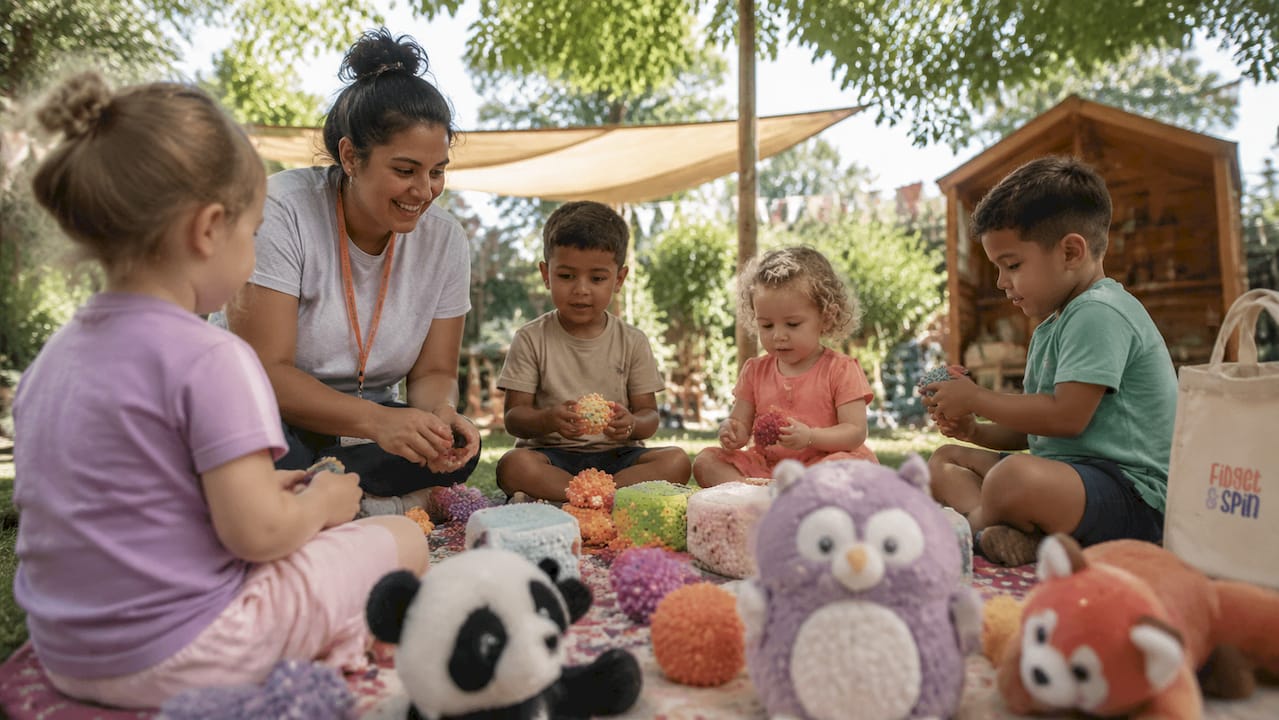
Fidget and Spin runs weekly sensory stay-and-play sessions in Brighton and Hove for neurodiverse children aged 1–6. Anthony and I started it because every mainstream group we tried with our son Remy felt like it was designed for someone else’s child. The sessions are built around three zones: Wiggle & Bounce for big movement, Snuggle & Chill for low-stim rest, and Squish & Squeeze for tactile play and fidgets. Children move between zones freely. Nobody is directed. Nobody is timed. You can find full details on how our sessions work on the Fidget and Spin website.
3. Special Little Voices music and movement
Special Little Voices runs Saturday sessions for children aged 3–6 at £5 per session in the Brighton area. The sessions use music and movement in a sensory-aware format, keeping volume and pace manageable. At £5, it is one of the most accessible options financially. It suits children who respond well to rhythm and sound when those elements are carefully controlled.
4. One for All inclusive forest school workshops
Therapeutic forest school workshops run at Bevendean Community Garden in Brighton. The six-week course runs weekly with two-hour sessions, starting from july 2026. Outdoor, nature-based play offers a genuinely different sensory environment from indoor soft play. Natural light, open space, and organic textures suit many children who find indoor venues overwhelming. The course format also builds routine, which many neurodiverse children find regulating.
5. Wired & Tired parent support with play
Wired & Tired is a monthly Brighton group for parents of neurodivergent children, meeting at £12.50 per session. It combines peer support with play time. Parents attend SEN-friendly groups primarily to counter isolation and access support, not just for their child’s entertainment. Wired & Tired addresses that directly. The group also gives parents space to exchange practical advice on navigating diagnosis pathways and local education systems, which is genuinely useful in a way that a parenting forum rarely is.
6. The Third Space hydrotherapy and sensory activities
The Third Space in Brighton offers hydrotherapy and sensory activities with hoist access, quiet zones, and facilities designed for children with complex needs. Water-based sensory play is deeply regulating for many children and is rarely available in standard play group settings. The Third Space fills that gap. It suits children with both sensory processing differences and physical access requirements.
7. Bright Beginnings play-based group
Bright Beginnings offers play-based sessions in the Brighton area with an inclusive focus. Sessions are structured around child-led activity with facilitators trained in SEN support. It is worth contacting them directly to confirm current session times, capacity limits, and whether they run dedicated SEN slots or integrated sessions. That distinction, as covered above, matters considerably.
8. What to look for when comparing groups
Choosing between these sessions comes down to your child’s specific sensory profile and your own capacity on any given week. The table below summarises the key practical details.
| Group | Session type | Cost | Age range | Sensory features |
|---|---|---|---|---|
| Fidget and Spin | Weekly stay and play | Not publicly listed | 1–6 | Three sensory zones, low-stim, free-flow |
| Special Little Voices | Weekly music and movement | £5 | 3–6 | Controlled sound, sensory-aware |
| One for All Forest School | 6-week course, weekly | Not publicly listed | Not publicly listed | Outdoor, natural light, open space |
| Wired & Tired | Monthly | £12.50 | Parent-focused | Peer support environment |
| The Third Space | Varies | Not publicly listed | Not publicly listed | Hydro pool, hoist access, quiet zones |
| Bright Beginnings | Play-based sessions | Not publicly listed | Not publicly listed | SEN-trained facilitators |
The groups that suit children with significant sensory sensitivities best are those with capped attendance, free-flow formats, and a dedicated quiet zone. Groups that suit parents who are also struggling are the ones that build in adult connection time, like Wired & Tired.
9. How to prepare for your first SEN play group visit
The first visit is almost always the hardest. Managing your own anxiety about how it will go is half the work.
- Contact the facilitator in advance. Tell them your child’s name, their sensory triggers, and any communication tools they use (AAC device, PECS cards, Makaton). Good facilitators will adjust. If they seem surprised by the question, adjust your expectations accordingly.
- Arrive early. Walking into a quiet room before other children arrive gives your child a chance to map the space. Arriving mid-session into noise and movement is a much harder ask.
- Locate the quiet zone first. Before your child starts playing, find the regulation station or low-stim area. Point it out to your child. Knowing it is there reduces the urgency when they need it.
- Plan your exit. Decide in advance at what point you will leave. Having a clear plan stops you from staying twenty minutes too long because you feel you should.
- Bring the familiar. A preferred fidget toy, a comfort object, or a snack from home can anchor a child in an unfamiliar environment. Do not rely on the group’s equipment to do all the regulating.
Pro Tip: Take a photo of the venue entrance and the play space before your first visit and show it to your child at home. Visual preparation reduces the unknown, which is often where the anxiety lives.
The goal of the first visit is not a perfect session. It is information. You are finding out what works and what does not, and that is genuinely useful regardless of how it goes.
Key takeaways
Autism-friendly play groups in Brighton work best when they combine free-flow child-led play, capped group sizes, and dedicated quiet zones, not just a welcoming attitude.
| Point | Details |
|---|---|
| Free-flow play reduces anxiety | Child-led sessions outperform structured activities for sensory-sensitive children. |
| Cap group size at 9–10 children | Smaller sessions reduce noise and improve regulation outcomes significantly. |
| Quiet zones matter most | A regulation station often determines whether a session succeeds or ends early. |
| Dedicated SEN slots beat mixed sessions | Integrated mainstream sessions rarely provide the sensory environment neurodiverse children need. |
| Parent connection is part of the value | SEN groups reduce parental isolation and provide practical advice on diagnosis and education. |
What I’ve actually learned from Brighton’s SEN play groups
I’ll be honest. The first time I took Remy to a mainstream baby group, we lasted eleven minutes. He bolted for the door when the singing started, and I spent the rest of the session fielding sympathetic smiles that felt a lot like pity. I left feeling worse than when I arrived, which is not what a play group is supposed to do.
The groups that actually worked for us had two things in common. First, nobody looked at Remy like he was a problem to be managed. Second, there was somewhere quiet for him to go when the room got too much. That sounds like a low bar. It is not. Most venues do not clear it.
I am sceptical of the word “inclusive” when it appears on a mainstream venue’s website. Inclusive often means “we won’t ask you to leave,” which is not the same as being built for your child. The groups listed here are different in degree, not just in intention. Some, like The Third Space, have invested in physical infrastructure. Others, like Wired & Tired, have understood that the parent’s regulation matters too.
What I did not expect was how much I would value the other parents. Networking with other neurodiverse families gives you informal but crucial advice on diagnosis pathways, school choices, and which professionals in Brighton are actually worth seeing. No website gives you that. A room full of parents who get it does.
The dry aside I’ll offer: if a venue’s SEN provision consists of turning the music down slightly on a Tuesday, it is not a SEN session. It is a Tuesday.
— Caitlin
Fidget and Spin’s sensory sessions in Brighton
Fidget and Spin runs weekly SEN stay-and-play sessions across Brighton and Hove, built specifically for neurodiverse children aged 1–6. Every session uses three sensory zones, a capped group size, and a free-flow format. There is no register, no circle time, and no expectation that your child will engage in any particular way.
Sessions run at Ladies Mile and Portslade. You can browse the Portslade SEN Stay and Play and Ladies Mile sessions on the Fidget and Spin website, or view all upcoming sensory sessions and book directly. Memberships are also available for families who want a regular weekly slot without booking each time.
FAQ
What is an autism-friendly play group?
An autism-friendly play group is a dedicated session designed around the sensory and regulation needs of neurodiverse children, typically featuring capped group sizes, free-flow play, quiet zones, and trained facilitators.
Are there dedicated SEN play groups in Brighton?
Yes. Fidget and Spin, Special Little Voices, and The Third Space all offer dedicated SEN or sensory-aware sessions in Brighton and the surrounding area.
How much do SEN play groups in Brighton cost?
Costs vary. Special Little Voices charges £5 per session, and Wired & Tired charges £12.50 per monthly meeting. Fidget and Spin session pricing is listed on the Fidget and Spin website.
What age are Brighton SEN play groups suitable for?
Most Brighton SEN play groups suit children aged 1–6, though Special Little Voices focuses on ages 3–6 and The Third Space caters for children with more complex needs across a broader age range.
How do I know if a play group is genuinely SEN-friendly?
Ask whether the session has a dedicated quiet zone, a capped attendance of around 9–10 children, and a free-flow format. Groups that cannot answer those questions clearly are unlikely to be built for sensory-sensitive children.
Recommended
- Neurodiverse play areas: a parent’s design guide | Fidget and Spin Brighton
- Group activities for SEN children: a practical guide | Fidget and Spin Brighton
- How to make play inclusive for neurodiverse kids | Fidget and Spin Brighton
- Parent support tips for raising neurodiverse children | Fidget and Spin Brighton