
TL;DR:
- Hands-on sensory play strategies support neurodiverse children’s development by engaging touch, movement, sound, and texture. Caregiver presence and short, consistent sessions using household items and open-ended activities are most effective, with tailored approaches based on individual sensitivities. Creating predictable, inclusive play spaces and offering child-led choices foster emotional regulation and comfort during sensory activities.
Effective sensory play strategies are hands-on methods that use touch, movement, sound, and texture to support neurodiverse children’s development and emotional regulation. In occupational therapy, this approach is often called sensory integration play, and the research behind it is solid. Sensory play builds brain infrastructure, supporting cognitive flexibility, motor skills, and language development during the years when the brain is growing fastest. You do not need a specialist room or expensive kits. A bowl of rice, a cup of water, and fifteen minutes of your time will do more than most people realise.
What are the most effective sensory play strategies for young neurodiverse children?
The single most important thing I have learned, after years of trial and error with our son Remy, is that the setup matters far less than your presence. Caregiver attentiveness — watching for signs of overstimulation and knowing when to quietly step in or step back — is more impactful than any elaborate activity. Remy has walked away from a beautifully prepared cloud dough station and spent forty minutes pouring water between two cups. That was a good session.
Here are the core strategies that actually work at home:
- Keep sessions short and consistent. Brief, regular sessions of 10 to 20 minutes daily for toddlers, and 20 to 30 minutes a few times a week for preschoolers, are more effective than long, infrequent ones. Consistency builds familiarity, and familiarity reduces anxiety.
- Use what you already have. Household items like water, rice, and fabric scraps are genuinely sufficient for meaningful sensory play. You do not need to order anything.
- Remove the pressure of a right outcome. Open-ended play with no goal builds confidence and imagination. If your child wants to tip the whole bin upside down, that is data, not a disaster.
- Contain the mess before you start. A shower curtain on the floor, a plastic storage box, or a tray takes thirty seconds to set up and removes the dread that stops many parents from starting at all.
- Watch, do not direct. Follow your child’s lead. Narrate what they are doing in simple language. Resist the urge to demonstrate the “correct” way to use the materials.
Pro Tip: If your child regularly refuses to engage, try sitting beside the tray and playing with the materials yourself, without inviting them to join. Curiosity usually wins within a few minutes.
How to tailor sensory play to your child’s sensitivities
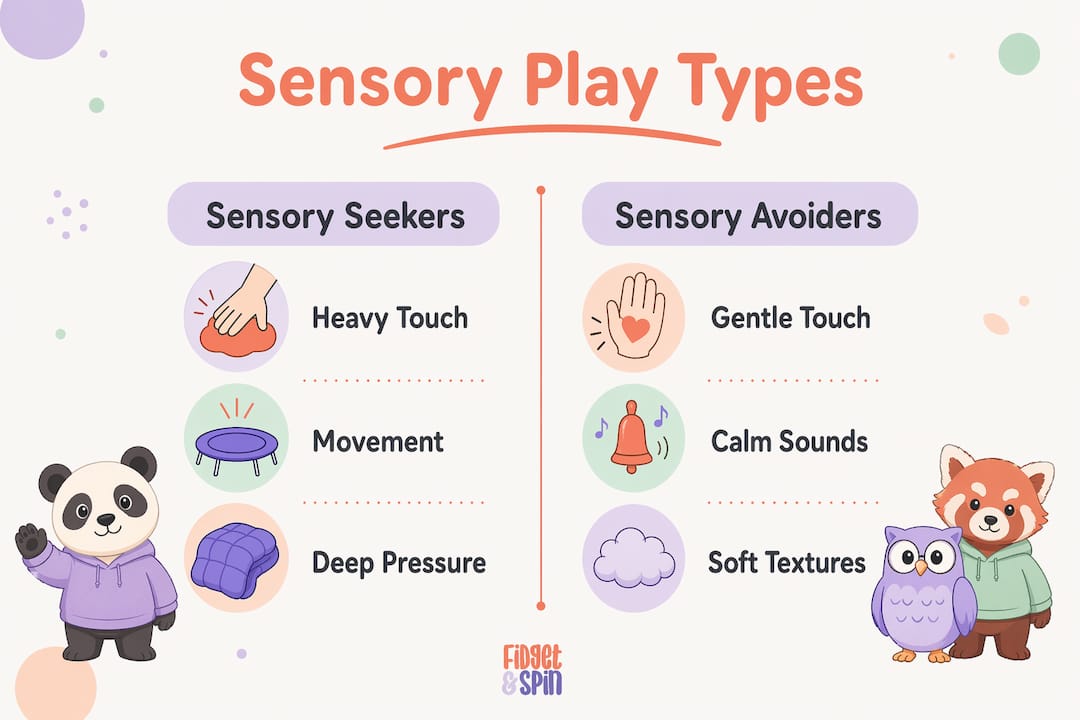
Every neurodiverse child sits somewhere on a spectrum between sensory avoider and sensory seeker, and most sit in different places depending on the day, the time, and whether they slept. Understanding which way your child leans in a given moment changes everything about how you set up play.
Here is a practical sequence for introducing new textures or materials without triggering a shutdown:
- Start with observation. Before introducing anything new, watch how your child responds to familiar textures. Do they avoid wet hands? Do they seek out heavy pressure? This tells you where to begin.
- Introduce via tools first. Using low-contact tools like spoons, tongs, or brushes lets a sensory-anxious child engage with a material without direct skin contact. This is not a workaround. It is the right starting point.
- Progress at their pace, not yours. Move from tool to fingertip to full hand contact only when your child initiates it. Weeks or months between steps is completely fine.
- Use visual schedules to signal what is coming. A simple picture card showing “play time” followed by “tidy up” followed by “snack” gives predictable structure. For children with PDA profiles, framing the schedule as a choice (“shall we do play or snack first?”) reduces demand anxiety significantly.
- Plan the ending before you start. Clear transition cues like “last scoop” or a visual timer counting down to the end of play reduce the dysregulation that often comes when stimulating activities stop abruptly. Paired with something positive afterwards, this makes endings far less fraught.
Pro Tip: For children who seek heavy sensory input, try adding weight to the play. A tray of kinetic sand, a bin of dried beans, or a weighted lap pad during quieter activities can meet that need without escalating arousal.
Sensory avoiders and sensory seekers need almost opposite environments, which is genuinely tricky when you have siblings with different processing profiles. The early years play strategies we use at Fidget and Spin are built around exactly this challenge.
What creative sensory play ideas work for families at home?
The best sensory activities are the ones you will actually set up on a Tuesday morning when you are tired and the week has already been a lot. Here is a breakdown of low-cost, genuinely inclusive options that cover different sensory channels:
| Activity | Sensory input | Cost | Best for |
|---|---|---|---|
| Rice or pasta bin | Tactile, proprioceptive | Under £2 | Seekers and cautious explorers via tools |
| Water pouring with cups | Tactile, auditory, visual | Free | Almost all profiles |
| Edible messy play (yogurt, mashed banana) | Tactile, taste, smell | Under £1 | Children with oral sensory needs or texture anxiety |
| Sensory bottles (glitter, beads, water) | Visual, auditory, calming | Under £3 | Avoiders, regulation support |
| Outdoor nature play (mud, leaves, bark) | Tactile, proprioceptive, smell | Free | Seekers, children who regulate better outside |
A few things worth noting about this list. Edible messy play is underused and underrated. For children who are anxious about textures, starting with food removes one layer of uncertainty because it is already familiar. Mashed banana on a highchair tray is a legitimate sensory activity. It is also breakfast, which is efficient.
Sensory bottles deserve a mention as a regulation tool, not just a play activity. A sealed bottle filled with water, glitter glue, and small beads gives a child something to focus on during transitions or high-anxiety moments. Sensory play helps children focus by providing a single, absorbing sensory experience that lowers background distraction. A glitter bottle on the way to a difficult appointment has saved us more than once.
Outdoor sensory play is often overlooked because it feels less structured. Mud kitchens, bark rubbing, collecting stones by texture or weight, and barefoot walking on grass all deliver rich proprioceptive and tactile input with zero preparation. For children who find indoor spaces overstimulating, outside is often where the best regulation happens.
How can parents create inclusive play spaces at home?
You do not need a dedicated sensory room. What you need is a consistent space, a predictable routine, and a few physical boundaries that signal to your child that this is their place to play without pressure.
- Define the play area clearly. A mat, a tray, or even a specific corner of the kitchen tells your child where play begins and ends. Physical boundaries reduce the anxiety of open-ended space, particularly for autistic children who process their environment spatially.
- Use containment tools consistently. Plastic mats or sensory bins with lids make cleanup a brief, predictable reset rather than a stressful event. When parents dread the mess, sessions happen less often. Containment solves that.
- Balance the needs of siblings. If one child seeks heavy input and another avoids it, set up parallel activities in the same space. A bin of kinetic sand beside a calm sensory bottle activity lets both children play together without one overwhelming the other.
- Give your child genuine choice. Offering two or three options (“rice bin or water play?”) hands control to the child, which matters enormously for children with PDA profiles or high demand sensitivity. Choice is not just nice to have. It changes whether the session happens at all.
- Keep familiar tools accessible. A child who always starts with a spoon before touching materials with their hands will regulate faster if that spoon is already there. Predictability is not boring. It is safe.
For more on building emotionally safe play environments, the inclusive play guide on the Fidget and Spin site goes into this in more depth.
Key takeaways
Effective sensory play for neurodiverse children works best when sessions are short, consistent, and led by the child’s own cues rather than a fixed outcome.
| Point | Details |
|---|---|
| Session length matters | Keep sessions to 10 to 20 minutes for toddlers; consistency beats duration every time. |
| Caregiver presence over equipment | Watching for overstimulation cues is more impactful than any elaborate activity setup. |
| Introduce textures gradually | Use spoons, tongs, or brushes first to reduce contact anxiety before progressing to hands-on play. |
| Containment reduces barriers | A mat or tray makes cleanup predictable, which means sessions actually happen more often. |
| Child-led choice builds regulation | Offering genuine options increases engagement and reduces demand anxiety, especially for PDA profiles. |
What I have actually learned from playing with Remy
I spent the first year of Remy’s life trying to do sensory play “properly.” I bought the moon sand. I watched the YouTube tutorials. I set up beautiful invitations to play that he walked past without a glance. What actually worked was sitting on the kitchen floor with a bowl of dried pasta and no agenda whatsoever.
The hardest thing to unlearn was the idea that a session had to look a certain way to count. Remy spent three weeks only touching the rice bin with one finger. That was progress. It just did not look like the Instagram version.
I have also had to make peace with the fact that emotional regulation does not happen in a straight line. Some days the glitter bottle works. Some days nothing works and we go outside and kick leaves instead. Both are valid. The research on cortisol reduction through tactile play is real, but it does not mean every session will end in calm. It means that over time, consistent sensory play builds a child’s capacity to regulate. That is a slower, quieter kind of progress than most parenting content prepares you for.
What I would tell any parent starting out: lower the bar for what counts as a session. Follow your child. Stop before they are done. And stop apologising for the rice on the floor.
— Caitlin
Sensory play sessions built for children like yours
If setting up sensory play at home feels like a lot right now, or if your child needs more than a kitchen tray can offer, Fidget and Spin runs weekly stay-and-play sessions in Brighton and Hove designed specifically for neurodiverse children aged 1 to 6.
Our three sensory zones, Wiggle and Bounce, Snuggle and Chill, and Squish and Squeeze, are built around the same principles in this article: child-led, low-pressure, and genuinely inclusive. There are no expectations, no side-eye, and no one asking your child to sit still. Anthony and I built the space we could not find anywhere else. You can book a sensory session directly, or if you want to know what to expect before you come, find out how our sessions work first.
FAQ
What is sensory play and why does it help neurodiverse children?
Sensory play is any activity that engages a child’s senses, including touch, movement, sound, smell, and sight, to support brain development and emotional regulation. For neurodiverse children, it builds the neural pathways that support focus, motor skills, and the ability to manage sensory input in daily life.
How long should a sensory play session be for a toddler?
Sessions of 10 to 20 minutes daily are recommended for toddlers, with preschoolers benefiting from 20 to 30 minute sessions a few times per week. Short and consistent is more effective than long and occasional.
What if my child refuses to touch the sensory materials?
Start with low-contact tools like spoons or tongs so your child can engage with the material without direct skin contact. Sitting beside the tray and playing yourself, without pressure to join, often works better than any direct invitation.
Do I need to buy specialist sensory toys or equipment?
No. Water, dried rice, pasta, fabric scraps, and yogurt are all effective sensory materials. Babies are ready for basic sensory play from around four months, and the most impactful element is always your attentive presence, not the equipment.
How do I end a sensory play session without a meltdown?
Use a clear, consistent cue like “last scoop” or a visual timer to signal the end before it arrives. Pairing the ending with something positive, like a snack or a preferred activity, helps stabilise regulation after stimulating play.
Recommended
- Effective early years play strategies for neurodiverse children | Fidget and Spin Brighton
- How to make play inclusive for neurodiverse kids | Fidget and Spin Brighton
- Educational games for neurodiverse kids: boost skills | Fidget and Spin Brighton
- Educational games for neurodiverse kids: boost skills | Fidget and Spin Brighton