
TL;DR:
- Play-based learning fosters cognitive, social, and emotional development in neurodiverse children by providing low-pressure, child-led environments.
- Research confirms that tailored play, including sensory-motor and serve-and-return interactions, enhances neuroplasticity and regulates nervous systems.
Play-based learning is defined as a child-led or guided approach to education where play is the primary vehicle for developing cognitive, social, and emotional skills. For neurodiverse children, including those with autism, ADHD, PDA, and sensory processing differences, the learning through play benefits are not a nice-to-have. They are neurologically grounded and backed by a growing body of research. A 2026 scoping review of 51 studies confirmed that play-based learning improves cognitive, academic, and socio-emotional outcomes in children aged 4 to 6 across North America, Europe, Asia, and Africa. That is not a soft finding. It means play works, and it works across cultures, contexts, and developmental profiles.
1. Cognitive development and executive function
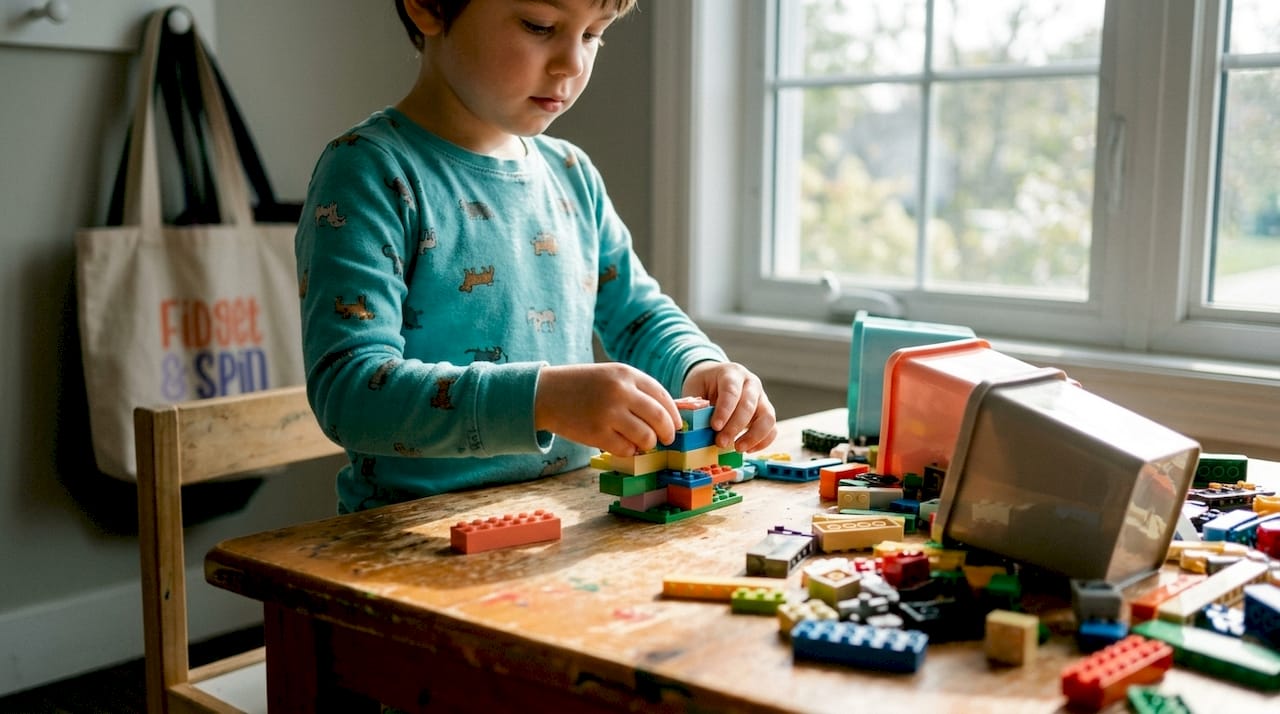
Remy, my son, learned to sequence steps by building with LEGO before he could follow a two-step verbal instruction. That is not anecdote over evidence. Neurobiology research confirms play engages neural plasticity, improving language and executive function with lifelong protective effects against neurodegeneration. Executive function covers working memory, flexible thinking, and impulse control. These are precisely the areas where many autistic and ADHD children need the most support, and play builds them without a worksheet in sight.
2. Social skills through serve-and-return interaction
Parent-child play offers critical serve-and-return interactions that help neurodiverse children regulate emotions and process social cues more effectively than screen time. Serve-and-return means one person initiates, the other responds, and the exchange builds trust and connection. For a child who finds eye contact uncomfortable or group settings overwhelming, this kind of low-pressure back-and-forth is where social understanding actually takes root. It is the difference between being told how to share and actually experiencing what it feels like when someone waits for you.
3. Creativity and imagination
A meta-analysis of 16 studies found that adult-guided peer play especially boosts creativity in primary-age children. Creativity is not just about art. It is the capacity to generate solutions, think flexibly, and tolerate uncertainty. For children who can become rigid when anxious, play that gently stretches imaginative thinking builds a kind of cognitive flexibility that structured tasks rarely reach. LEGO-based activities, small-world play, and sensory-motor exploration all serve this purpose well.
4. Resilience and growth mindset
Play removes the pressure of right and wrong answers. Play-based environments are intentionally designed to allow exploration without the anxiety of failure, and this directly builds a growth mindset. For neurodiverse children who have often experienced correction, redirection, or sensory overwhelm in traditional settings, a low-stakes space to try, fail, and try again is genuinely therapeutic. Resilience is not taught through lectures. It is practised through repeated low-stakes experience.
5. Language and communication development
Play is one of the most effective contexts for language acquisition, particularly for children who use AAC devices, PECS, or are developing verbal communication at their own pace. When a child points at a sensory tray and you name what they are touching, that is a language lesson. When they hand you a toy and you respond with words and action, that is a communication exchange. Play builds communication skills in neurodiverse children precisely because it follows the child’s lead rather than demanding a prescribed response.
6. Independence and self-led learning
Self-directed play builds confidence in a way that adult-directed tasks rarely do. When a child chooses what to explore, they are practising decision-making, tolerating uncertainty, and discovering their own preferences. For children with PDA profiles, where demand avoidance is a genuine neurological response rather than defiance, self-led play is not just preferable. It is often the only context in which learning happens at all. Play-based learning nurtures curiosity, persistence, and imagination, which are the dispositions that matter far more than early academic content for children who may struggle in conventional schooling.
7. Sensory regulation through tailored play environments
Sensory-motor play, including tactile exploration, proprioceptive input through heavy work, and vestibular movement, directly supports a child’s ability to regulate their nervous system. A child who has had enough deep pressure through squishing and squeezing is often far more available for connection and learning than one who has been sitting still for an hour. OT and play-based support for neurodiverse children draws on exactly this principle, using play as the mechanism for sensory integration rather than a separate clinical exercise.
Pro Tip: If your child seeks out specific textures or movements repeatedly, that is not a distraction. It is self-regulation. Build those inputs into play rather than redirecting away from them.
8. Reducing academic anxiety
Many neurodiverse children arrive at formal learning already carrying anxiety from environments that were not built for them. Play resets that. Play-based learning yields more joy and higher academic engagement precisely because it decouples learning from performance pressure. When a child is absorbed in play, they are not monitoring themselves for failure. That absence of self-monitoring is where genuine learning happens, and it is something many neurodiverse children rarely get to experience in traditional classroom settings.
9. Neuroplasticity and long-term brain development
The neurobiology of play shows that play activates brain circuits involved in reward, social bonding, and executive function, with effects that extend well beyond childhood. This is not just about what a child learns today. It is about the neural architecture being built for tomorrow. For neurodiverse children whose brains may process information differently, play offers a flexible, low-pressure context for building those circuits in ways that rigid instruction cannot replicate.
10. Physical coordination and health
Active play, including group movement, supports executive function and physical health more effectively than individual focused exercise in young children. Gross motor play, jumping, climbing, rolling, and spinning, develops coordination, body awareness, and proprioception. For children with dyspraxia or low muscle tone alongside autism or ADHD, this kind of movement-based play is not optional enrichment. It is developmental work dressed up as fun, which is exactly how it should be.
How play shapes social and emotional development
I have watched Remy go from bolting out of a room the moment another child came near to sitting alongside someone, not quite playing together but not fleeing either. That shift did not come from social skills worksheets. It came from repeated, safe, low-demand play experiences where nobody was forcing interaction.
Serve-and-return exchanges are the mechanism here. Each small interaction, a child reaching for a toy and an adult or peer responding, builds the neural pathways for social understanding. For neurodiverse children, these exchanges need to happen on their terms, at their pace, without the pressure of eye contact or verbal response being demanded. Play creates the conditions for that.
Research from Harvard’s Center on the Developing Child confirms that these interactions are more developmentally significant than passive screen time, even educational screen time. The emotional regulation guide for SEN children reinforces this: play is where children practise reading social cues, managing frustration, and experiencing repair after conflict, all within a context that feels safe enough to try.
Pro Tip: If peer play feels too much right now, parallel play alongside a trusted adult is a completely valid and developmentally appropriate starting point. Side by side, not face to face.
What adults actually need to do during play
Here is the thing nobody tells you at the baby group: hovering is not helping. Intentional adult guidance in play means balancing freedom with support, not directing every move. Too much adult intervention reduces creativity and signals to the child that their instincts cannot be trusted.
What actually works is observing before joining. Watch what your child is drawn to. Notice what they avoid. Follow their lead rather than introducing your agenda. When you do join, match their energy and pace rather than redirecting toward a goal you have set.
For neurodiverse children specifically, adults play a critical role in designing the play environment itself. Sensory zones, low-stimulation corners, and clear physical boundaries all reduce the cognitive load of navigating a space, which means more capacity for actual play. The adult’s job is to make the environment safe enough that the child can take risks within it.
Tailoring play for sensory needs and diverse processing styles
Not every child can walk into a busy soft play and access learning. For many neurodiverse children, the environment itself is the barrier. Sensory-rich but flexible spaces, where a child can move between high-stimulation and low-stimulation areas, are not a luxury. They are a prerequisite for play-based learning to work at all.
Sensory-motor therapy uses play as the vehicle for proprioceptive and vestibular input. LEGO-based activities support turn-taking, communication, and problem-solving in a structured but playful format. For children using AAC or PECS, play provides the natural context for communication attempts without the pressure of a formal exchange. Encouraging confident play in neurodiverse children means respecting their sensory thresholds, not pushing through them.
The goal is not to expose children to more stimulation until they cope. The goal is to create conditions where they can genuinely engage, which sometimes means quieter, slower, and more predictable than mainstream play settings offer.
Key takeaways
Play-based learning builds cognitive, social, and emotional skills in neurodiverse children most effectively when the environment is sensory-aware, adult involvement is guided rather than controlling, and the child’s own pace and preferences lead the way.
| Point | Details |
|---|---|
| Play builds executive function | LEGO, sensory-motor, and imaginative play develop working memory and flexible thinking. |
| Serve-and-return drives social learning | Low-pressure back-and-forth exchanges build social understanding more effectively than instruction. |
| Adult role is environment design | Set up the space, observe, then follow the child’s lead rather than directing play. |
| Sensory regulation enables learning | A regulated nervous system is the foundation; sensory play creates that regulation. |
| Low-stakes exploration builds resilience | Removing right-or-wrong pressure allows neurodiverse children to try, fail, and grow. |
What I have actually seen change
I spent the first two years of Remy’s life leaving places early. Soft play was a sensory assault course followed by a meltdown in the car park. Baby groups involved me smiling apologetically while Remy dismantled the snack table. I did not feel like play was doing anything except exhausting us both.
What shifted was not Remy. It was the environment. When we found spaces that were designed for how his nervous system actually works, where the lights were not blinding and the noise was not relentless and nobody expected him to sit in a circle, play became something he could actually access. And once he could access it, the learning followed. Not because we engineered it. Because that is what play does when the conditions are right.
I am sceptical of anything that promises to fix a child through the right programme or the right toy. But I am genuinely convinced, from research and from watching Remy, that play in the right environment is where neurodiverse children build the skills that matter. Not despite their differences. Through them.
— Caitlin
Play sessions built for children like yours
If you have been reading this thinking “yes, but where do we actually find that kind of space,” that is exactly why Anthony and I built Fidget and Spin.
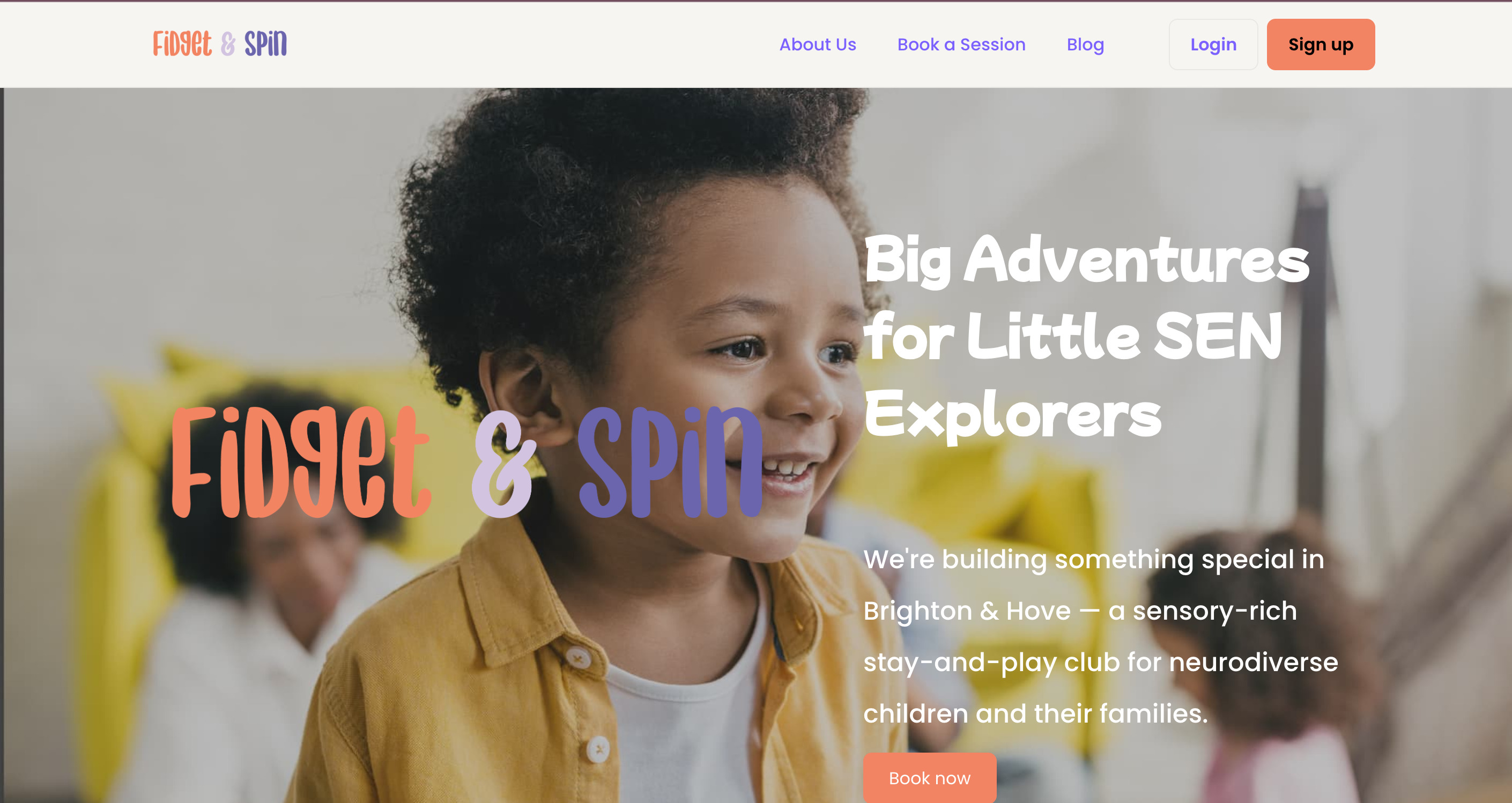
Our weekly sensory stay-and-play sessions in Brighton and Hove are designed around three zones: Wiggle and Bounce for big movement, Snuggle and Chill for low-stimulation rest, and Squish and Squeeze for tactile and fidget play. Every session is SEN-informed, low-demand, and built for children aged 1 to 6 whose nervous systems need something different from mainstream groups. You can find out more about how our sessions work and what to expect before you arrive. No side-eye. No rushing. Just play that actually works for your child.
FAQ
What are the main learning through play benefits for neurodiverse children?
Play-based learning builds executive function, emotional regulation, communication, and social skills in neurodiverse children by creating low-pressure environments where learning follows the child’s lead. A 2026 scoping review of 51 studies confirmed cognitive, academic, and socio-emotional gains across diverse populations.
Why is play important for children with autism or ADHD?
Play provides the serve-and-return interactions and sensory input that autistic and ADHD children need to regulate their nervous systems and develop social understanding, without the performance pressure of formal learning. It also builds the executive function skills, including working memory and flexible thinking, that are commonly affected in both profiles.
How does sensory play support regulation?
Sensory-motor play, including tactile, proprioceptive, and vestibular input, directly supports nervous system regulation. A child who is regulated through movement and sensory input has significantly more capacity for connection, communication, and learning.
What is the adult’s role in play-based learning?
Adults support play most effectively by designing a safe, sensory-aware environment, observing the child’s cues, and joining play on the child’s terms rather than directing it. Research confirms that too much adult intervention reduces creativity and problem-solving in young children.
Can play-based learning work for children who avoid group settings?
Parallel play alongside a trusted adult is a developmentally valid starting point for children who find peer interaction overwhelming. The importance of play in education does not require group participation. It requires a safe enough context for the child to engage, whatever form that takes.
Recommended
- Effective early years play strategies for neurodiverse children | Fidget and Spin Brighton
- Educational games for neurodiverse kids: boost skills | Fidget and Spin Brighton
- Educational games for neurodiverse kids: boost skills | Fidget and Spin Brighton
- Play that builds communication skills in neurodiverse children | Fidget and Spin Brighton