TL;DR:
- Sensory resources help neurodiverse children regulate their sensory experiences and participate more fully in daily life. Effective tools include weighted blankets, fidget items, sensory diets, and environmentally adapted spaces, all supported by research and occupational therapy. Consistent use and personalized approaches across home and school are essential for optimal regulation and development.
Sensory resources are specialised tools and strategies designed to help neurodiverse children regulate their sensory experiences and participate more fully in daily life. The top sensory resources 2025 has to offer span everything from weighted blankets and fidget tools to structured sensory diets and inclusive classroom design, all grounded in the principles of Ayres Sensory Integration. A 2025 systematic review by Piller et al. found strong evidence that Ayres Sensory Integration improves individual goal attainment and moderate evidence for daily living and social skills in children up to 21. That is not a small finding. It means the tools and approaches in this guide are not wishful thinking. They are backed by real research, tested by real families, and worth your time.
1. what are the top sensory resources for 2025?
The best sensory tools 2025 has available fall into a few clear categories: proprioceptive and vestibular tools, tactile resources, auditory supports, and visual calming aids. Each targets a different sensory system, and most children need a mix rather than one magic fix.
Weighted blankets and lap pads provide deep pressure input, which many autistic and ADHD children find regulating. They work best when used consistently, not just during meltdowns.
Fidget tools such as tangle toys, spiky rings, and squish balls give hands something to do during seated tasks. They reduce the urge to seek movement in ways that disrupt others.

Chewy necklaces and chewelry meet oral sensory needs safely. They are a practical alternative to chewing clothing, which every parent of a sensory-seeking child knows all too well.
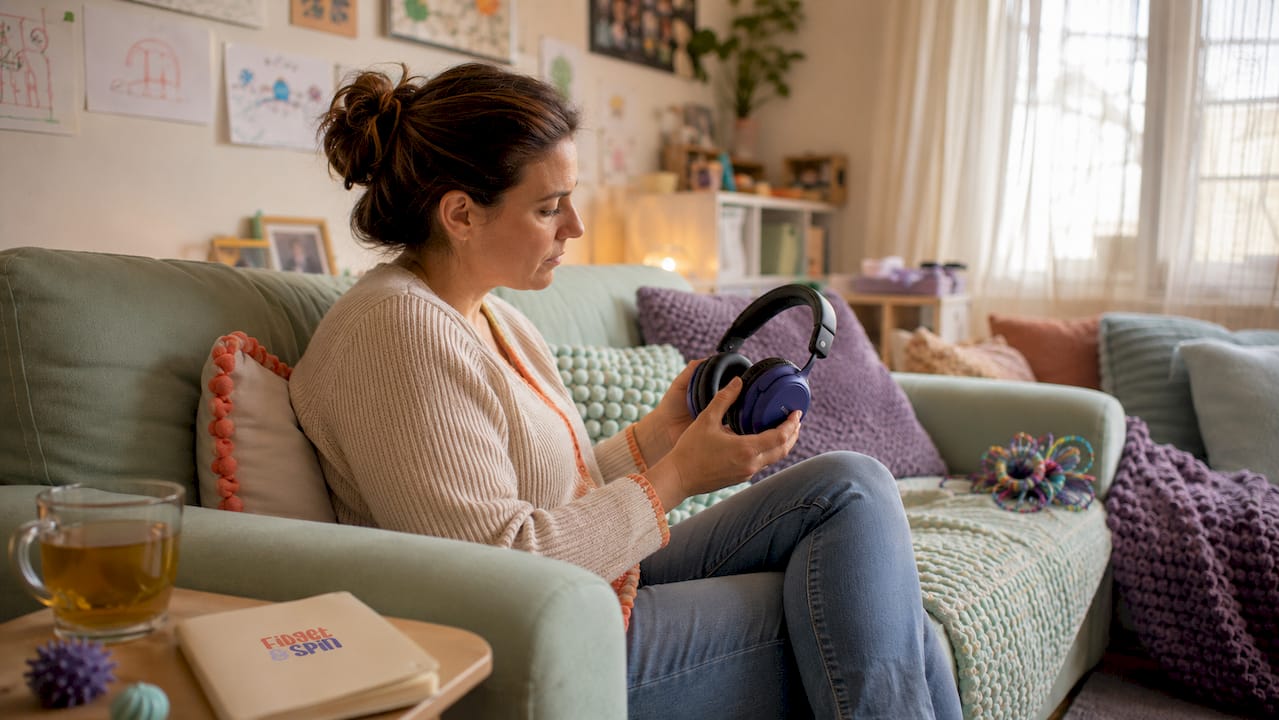
Noise-cancelling headphones such as those made by Peltor or Banz reduce auditory overwhelm in busy environments. They are one of the most portable and immediately effective tools available.
Wobble cushions and move-and-sit wedges allow children to get vestibular input while seated, which supports attention without requiring a separate movement break.
Bubble tubes and fibre optic lights provide visual and tactile stimulation in a calming, low-demand way. They are common in sensory rooms but can be adapted for home use.
Tactile bins filled with kinetic sand, dried lentils, or water beads offer rich sensory play resources for children who seek tactile input. They are cheap to make and easy to adapt.
Sensory walls with different textures, switches, and interactive panels support proprioceptive and tactile exploration. Schools and nurseries increasingly build these into corridor spaces.
Auditory calming tools such as white noise machines or nature sound speakers help children who are easily startled or overwhelmed by unpredictable noise.
Sensory integration equipment such as platform swings, lycra tunnels, and crash mats are used by occupational therapists in clinical settings but can be adapted for home use with guidance.
Pro Tip: Start with one or two tools that target your child’s most frequent sensory flashpoints. Introducing ten things at once tends to overwhelm everyone, including you.
2. how sensory diets and sensory circuits support regulation
A sensory diet is not about food. A sensory diet is a personalised, scheduled programme of sensory activities designed to keep a child’s nervous system regulated throughout the day. An occupational therapist designs it based on your child’s specific sensory profile, and it is meant to be coordinated across home, school, and community settings.
The goal is not to force calmness. Sensory support aims to help the child feel more organised and able to participate with less stress. That framing matters, because it shifts the focus from compliance to capacity.
A sensory circuit is a structured sequence of activities that follows three stages:
- Alerting activities to wake up the nervous system. Think jumping on a trampoline, star jumps, or bouncing on a therapy ball.
- Organising activities to help the child process and integrate input. Examples include crawling through a tunnel, carrying heavy books, or pushing a weighted trolley.
- Calming activities to bring the nervous system back to a regulated state. Deep pressure, slow rocking, or lying under a weighted blanket all work here.
Sensory circuits must be repeatable, staged routines rather than one-off activities to reliably support regulation. Running the same sequence each morning before school creates a predictable sensory anchor that many children genuinely depend on.
Calm corners and sensory boxes sit alongside circuits as everyday tools. A calm corner needs only a beanbag, a few fidget items, and something visually soothing. A sensory box might contain a chewy, a small weighted lap pad, a tangle toy, and a pair of ear defenders. The point is that the child can access it independently, without having to ask.
Pro Tip: Write your child’s sensory circuit on a visual schedule with pictures. Children who use AAC or PECS can follow it independently, which builds confidence alongside regulation.
3. what sensory-inclusive learning environments look like
Physical spaces shape how children regulate. A child who is overwhelmed by flickering fluorescent lights or unpredictable corridor noise cannot learn, regardless of how good the teaching is.
Scotland’s sensory-inclusive learning environments guidance covers nurseries, schools, and out-of-school settings. It is short, non-technical, and designed for any learning environment. It references the detailed building guidance PAS 6463 (2022) and includes sensory audits and maps created with children to identify areas of overload and calm.
Key environmental adaptations that make a measurable difference include:
- Lighting: Replace flickering fluorescents with warm LED panels. Add blackout blinds for children who are light-sensitive.
- Noise control: Use carpet, soft furnishings, and acoustic panels to reduce reverberation. Designate quiet zones where children can decompress.
- Visual clutter: Reduce displays and busy wall coverings in key learning areas. Less visual noise supports focus.
- Flexible seating: Offer wobble stools, floor cushions, and standing desks alongside standard chairs.
- Transition spaces: Create low-stimulation corridors or waiting areas between high-demand activities.
| Environmental Factor | Low-Cost Adaptation | Higher-Investment Option |
|---|---|---|
| Lighting | Warm-toned bulbs, blackout blinds | LED panel replacement |
| Noise | Soft furnishings, rugs | Acoustic wall panels |
| Seating | Floor cushions, wobble cushions | Specialist seating range |
| Quiet zones | Tent or pop-up den | Dedicated sensory room |
| Visual input | Reduced wall displays | Neutral colour scheme refit |
Sensory integration underpins learning and should be embedded in classroom routines, relationships, and environments rather than treated as an add-on. That is the bit schools often miss. A sensory room that children visit once a week is not the same as a classroom that is designed to support regulation all day.
4. how to choose sensory resources for your child
Sensory processing differences vary enormously. One child seeks constant proprioceptive input and crashes into everything. Another is so sensitive to touch that certain fabrics cause genuine distress. The same resource will not work for both. That is why personalised approaches matter more than any generic list.
An OT assessment is the most reliable starting point. Private OT assessments cost approximately £150–£350 with written reports often needed for school support or EHCP applications. If that is out of reach financially, the Kent NHS Sensory Processing Pathway offers Stage 1 self-help resources with no referral required. Many other NHS trusts have similar pathways.
A written OT-signed sensory diet plan for school staff produces smoother implementation and consistency across settings, reducing regulatory lapses. Ask your OT to produce a school version alongside the home plan. It removes ambiguity and gives teachers something concrete to follow.
Practical considerations when choosing sensory learning resources 2025 style:
- Portability: Can it go in a school bag? A small fidget pouch travels everywhere.
- Durability: Children who seek heavy input will destroy flimsy tools quickly.
- Sensory profile match: Seek-versus-avoid matters. A child who avoids tactile input does not need a tactile bin.
- Cost: Many effective tools cost very little. A pillowcase filled with rice makes a decent weighted lap pad.
- Peer visibility: Some children care deeply about standing out. Discreet tools like chewelry or a small tangle toy reduce that pressure.
Home-to-school consistency with sensory tools is the factor most families underestimate. When the same tool appears in both settings, children regulate faster and more reliably. It is worth buying two of anything that works.
Key takeaways
The most effective sensory support in 2025 combines OT-guided tools, consistent sensory diets, and inclusive environments working together rather than in isolation.
| Point | Details |
|---|---|
| Start with an OT assessment | A written sensory profile guides tool choice and reduces wasted spending on things that do not fit. |
| Use sensory diets across settings | Coordinate home and school plans with your OT to build consistent regulation throughout the day. |
| Adapt physical environments | Lighting, noise, and seating changes support regulation without requiring any specialist equipment. |
| Match tools to sensory profile | Seek versus avoid differences mean one child’s calming tool is another child’s source of distress. |
| Repeat sensory circuits daily | Staged, repeatable routines build regulation capacity over time far better than occasional one-off activities. |
What i have actually learnt from doing this with remy
The honest version is that we got it wrong a lot before we got it right. We bought things Remy never touched. We tried sensory circuits at the wrong time of day and wondered why they made things worse. We sent a fidget tool to school and it came home in a bag, unused, because nobody knew what it was for.
The shift came when we stopped treating sensory tools as individual fixes and started thinking about the whole day. What does Remy need before school? What does he need when he gets home? What does a birthday party or a supermarket trip cost him, and how do we help him recover? Sensory zone ideas at home gave us a framework for that thinking.
I am also sceptical of the idea that more tools equals better support. Remy has about five things he actually uses. The rest sit in a drawer. What matters is that those five things are available consistently, that the people around him know what they are for, and that nobody makes him feel odd for needing them.
The small wins are real. The first time he came out of a noisy event without a meltdown because he had his ear defenders. The morning the sensory circuit meant he got to school calm enough to actually sit down. Those moments do not make the hard days disappear. But they remind you that the effort is going somewhere.
— Caitlin
Try sensory play in a space built for it
If you are still working out which tools and approaches suit your child, sometimes the most useful thing is to watch them play in an environment that is already set up for sensory regulation.
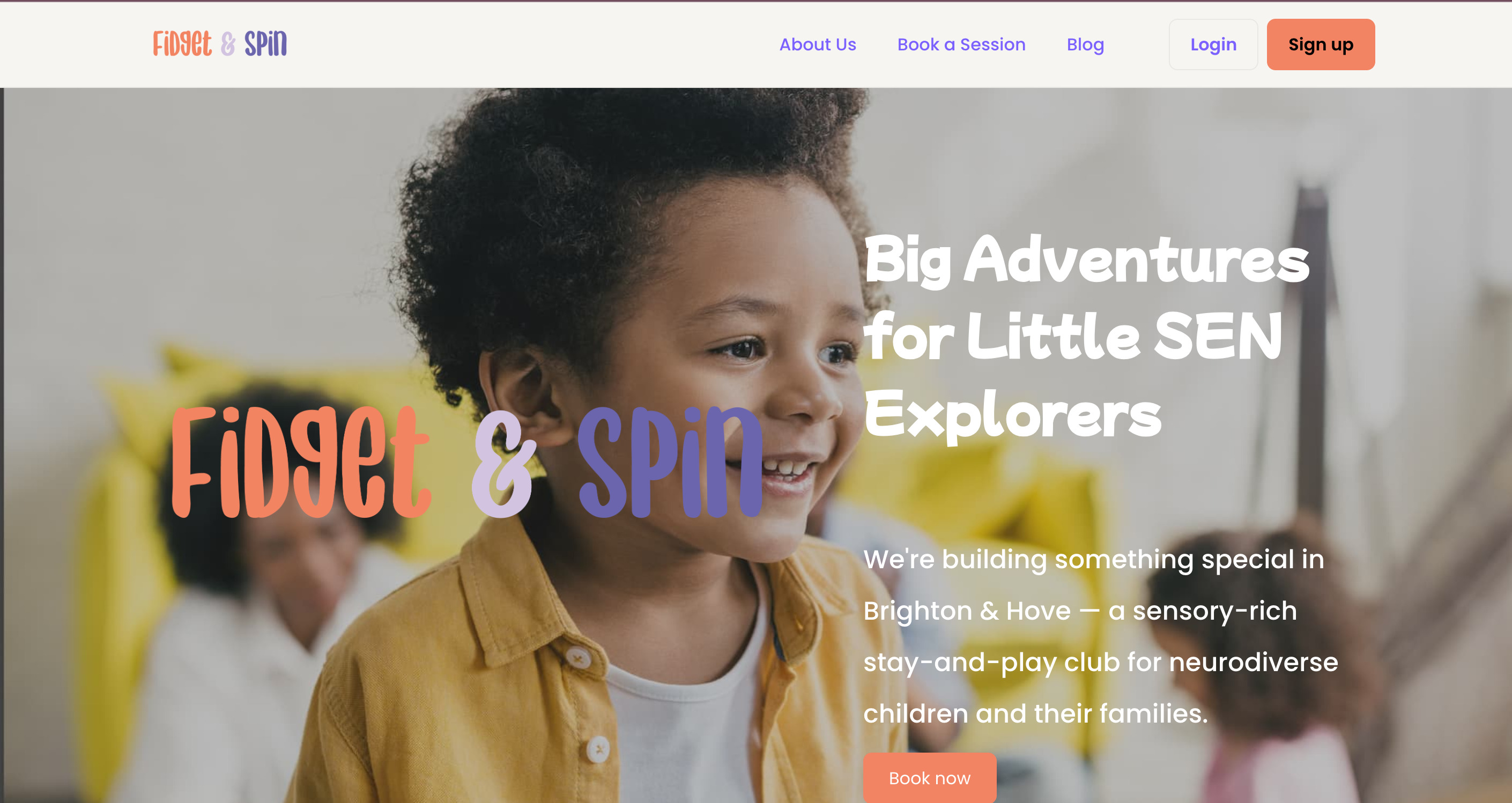
At Fidget and Spin, our weekly sensory play sessions in Brighton and Hove are designed for neurodiverse children aged 1–6. Three zones cover big movement, low-stimulation cosy spaces, and tactile play with fidgets. You can see what your child gravitates towards, what they avoid, and what helps them settle. That information is genuinely useful when you are choosing tools for home. We also run SEN-friendly birthday parties across Brighton, Hove, and wider Sussex for ages 1–7, because neurodiverse children deserve a party that actually works for them.
FAQ
What are sensory resources?
Sensory resources are tools, activities, and environmental adaptations that support a child’s ability to regulate their sensory system. They include physical items like weighted blankets and fidget tools, as well as structured approaches like sensory diets and sensory circuits.
How do i know which sensory tools my child needs?
An occupational therapist assessment is the most reliable way to identify your child’s sensory profile and match tools to their specific needs. Many NHS trusts offer self-referral pathways with free Stage 1 resources if private assessment is not accessible.
What is a sensory diet and who creates it?
A sensory diet is a personalised schedule of sensory activities designed to keep a child’s nervous system regulated throughout the day. An occupational therapist creates it based on the child’s sensory profile, and it should be coordinated across home and school.
Are sensory resources backed by evidence?
Yes. A 2025 systematic review by Piller et al. found strong evidence that Ayres Sensory Integration improves individual goal attainment in children up to 21, with moderate evidence for daily living and social skills.
How can i make sensory resources work at school?
Ask your OT to produce a written school version of your child’s sensory diet plan. Providing school staff with a clear, signed document reduces inconsistency and gives teachers a concrete framework to follow during the day.
Recommended
- Sensory integration strategies: a step-by-step guide | Fidget and Spin Brighton
- What is proprioceptive input: a parent’s guide | Fidget and Spin Brighton
- A practical guide to effective sensory club sessions | Fidget and Spin Brighton
- A practical guide to effective sensory club sessions | Fidget and Spin Brighton