
TL;DR:
- Sensory play helps neurodiverse children regulate their nervous systems, reduce repetitive behaviors, and build communication skills. Controlled multisensory environments, offering children agency, have been shown to increase attention and decrease distress in autistic children. Practical at-home tips include offering simple materials and respecting the child’s choices to promote comfort and participation.
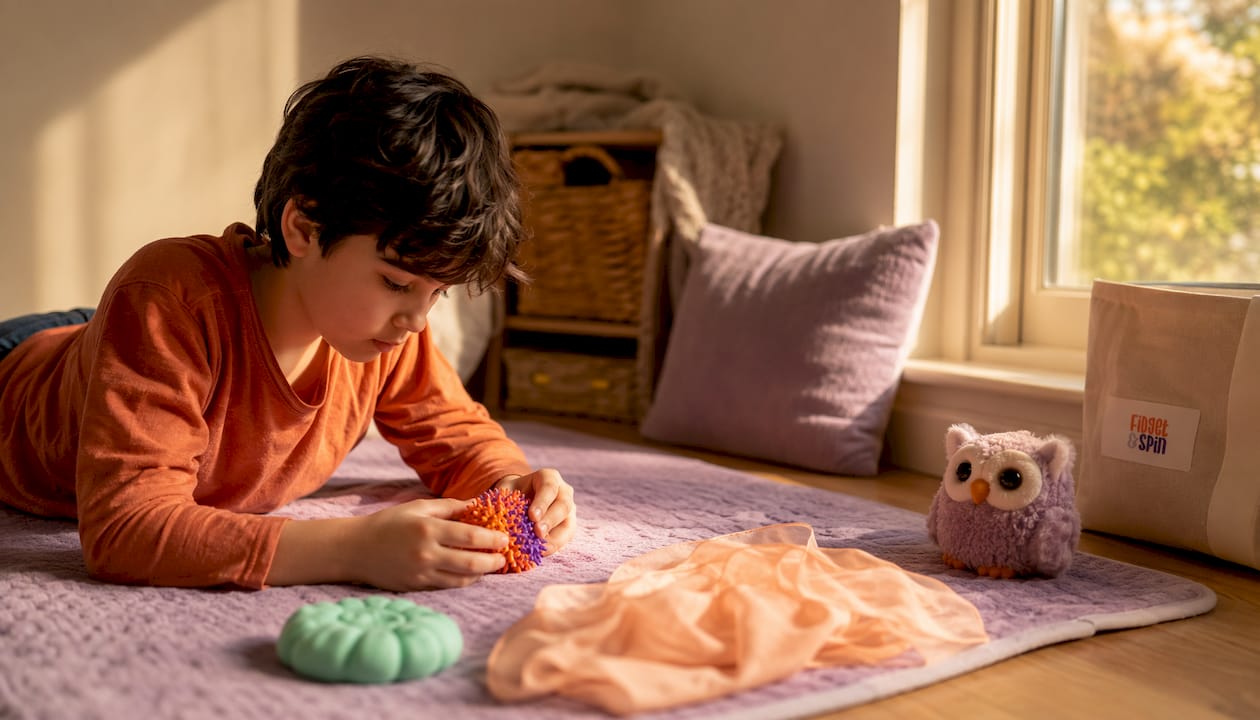
Sensory play helps neurodiverse children regulate their nervous systems, reduce repetitive motor behaviours, sustain attention, build motor coordination, develop communication, and grow a sense of agency. That is the short version. The longer version is what I lived through with my son Remy before Anthony and I built Fidget and Spin, because no existing group in Brighton was doing this well enough.
The NHS and the Royal College of Occupational Therapists both recognise sensory processing differences as part of wider neurodevelopmental profiles, and a 2021 study of 41 autistic children aged 4–12 found that giving children direct control over a multisensory environment reduced repetitive motor behaviours and increased attention compared with no-control settings. Roughly one in seven children in the UK are neurodivergent. That is a lot of families leaving soft play early.
Key advantages and what to watch for:
- Self-regulation: child settles more quickly, fewer forced meltdowns after sessions
- Reduced repetitive motor behaviours: less distress-driven stimming during play
- Improved attention: longer, more sustained engagement with a single activity
- Motor and coordination gains: more confident climbing, pouring, and fine-motor tasks
- Communication and social connection: more eye contact, turn-taking, or AAC use during play
- Confidence and agency: child initiates choices, returns to preferred activities independently
| Advantage | Observable sign | Evidence or source |
|---|---|---|
| Self-regulation | Quicker settling, fewer meltdowns | 2021 multisensory-control study |
| Reduced repetitive motor behaviours | Less distress-driven stimming | 2021 multisensory-control study |
| Improved attention | Longer focused play | 2021 multisensory-control study |
| Communication and social connection | More turn-taking, AAC use | Sense: sensory play guidance |
| Confidence and agency | Child initiates choices | Practitioner study on agency |
| Identity and connection | Child explores likes and dislikes safely | Sense: sensory play guidance |
Approximately one in seven children in the UK are neurodivergent. Most mainstream play settings are not built for them.
Pro Tip: At the start of any session, offer your child two or three concrete choices: which zone to enter first, whether the lights stay dim or bright, and whether they want a fidget toy or a squeeze ball. That small act of control predicts better engagement and less distress throughout.
Table of Contents
- What the evidence actually says about sensory play
- Practical tips for offering sensory play at home
- How to adapt sensory play for different neurodiverse profiles
- When sensory play is difficult: challenges to know about
- How to track whether sensory play is making a difference
- Organisations and resources for SEN families in the UK
- Sensory sessions and SEN parties built for children like Remy
- FAQ
What the evidence actually says about sensory play
I get asked a lot whether sensory play is “evidence-based” or just a nice idea. The honest answer is: the evidence is real, and the clinical framing matters.

The 2021 study is the clearest signal we have. Forty-one autistic children aged 4–12 showed measurably reduced repetitive motor behaviours and increased attention when they controlled their multisensory environment. The key variable was agency, not the equipment itself.
The NHS and the Royal College of Occupational Therapists do not list sensory processing disorder as a standalone diagnosis. Sensory processing differences are assessed within broader neurodevelopmental evaluations. That is not a reason to dismiss sensory play. It means the goal is support and participation, not fixing a named condition. Occupational therapy principles applied through play-based support reflect exactly that framing.
Sense, the national UK charity supporting disabled children, frames sensory play as a way to build connection and sense of self, not merely therapy. That distinction matters to me as a parent. Remy does not need fixing. He needs a space where his way of engaging with the world is welcomed.
Practical tips for offering sensory play at home
Start small. You do not need a dedicated room or expensive equipment.
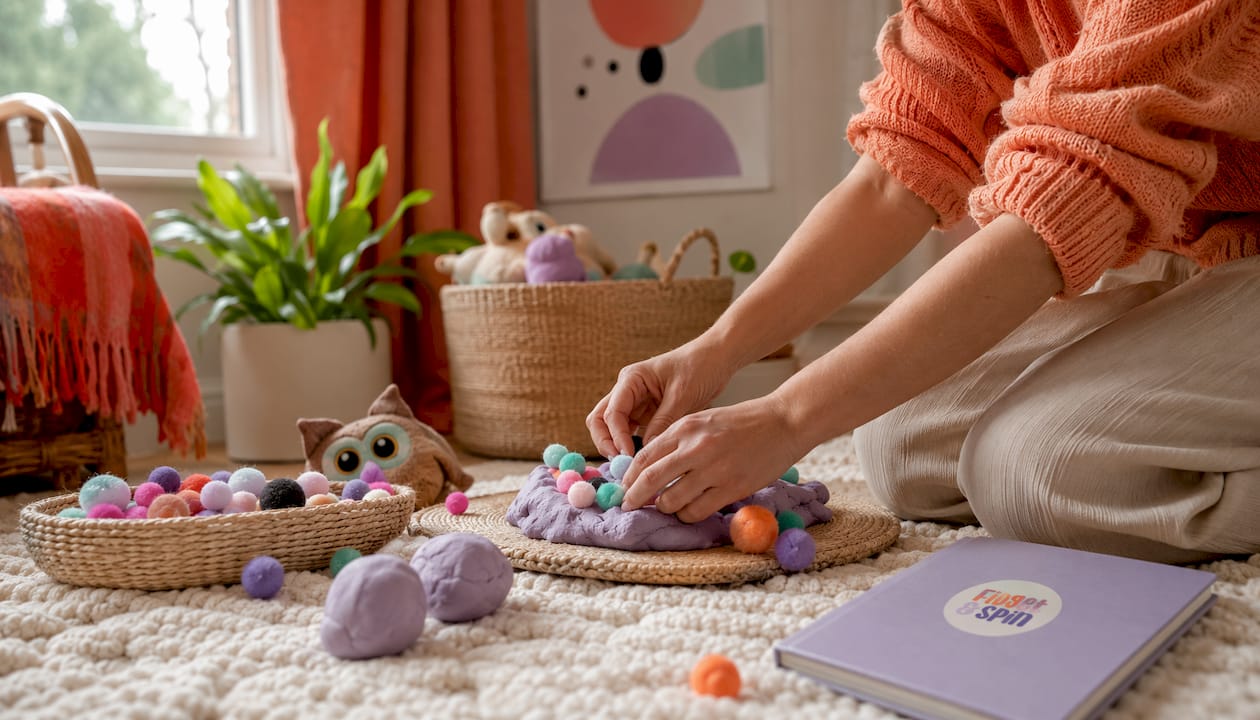
A tray of dried pasta, a bowl of water and food colouring, or a zip-lock bag filled with hair gel and glitter are all legitimate sensory play activities that cost almost nothing. The principle is the same as in a professional session: offer the material, then follow the child’s lead.
On agency and consent: always let your child approach or leave an activity on their own terms. Forcing contact with a texture they find distressing does not build tolerance; it builds dread. Offer the option, narrate what it is (“this is cold and squishy”), and step back.
On safety: check for choking hazards with children under three, avoid latex if there is any allergy history, and never leave water play unsupervised. Interoception difficulties are common in neurodivergent children, meaning a child may be in sensory overload without telling you. Watch for flushed cheeks, withdrawal, or a sudden shift to distress-driven stimming rather than exploratory stimming.
Signs it is helping: your child returns to the activity voluntarily, engages for longer over time, or begins to use words, signs, or AAC to request it. Those are the markers worth tracking.
How to adapt sensory play for different neurodiverse profiles
Autistic children and children with ADHD both benefit from sensory play, but the approach often needs adjusting.
For autistic children: predictability reduces anxiety. Use the same materials in the same order at first, and introduce new textures gradually alongside familiar ones. Low-stim options (dim lighting, minimal background noise, a quiet corner) are not a last resort; they are often where the best regulation happens. Supporting stimming rather than redirecting it keeps the child in a regulated state and builds trust.
For children with ADHD: movement is the entry point. Start with a high-energy zone (jumping, climbing, spinning) before transitioning to fine-motor or tactile activities. Short rotations work better than long open-ended sessions. Build in clear, simple transitions (“two more jumps, then we try the sand”).
For PDA profiles: framing matters enormously. “Would you like to try the slime, or shall we look at it first?” lands very differently from “Come and do the slime.” Indirect invitations and genuine choice reduce demand and increase participation. The sensory play strategies that work best for PDA children are the ones that hand control back at every step.
When sensory play is difficult: challenges to know about
Sensory play is not universally calming for every child in every moment. Some children are hypersensitive to specific inputs and will find certain textures, sounds, or lights actively distressing rather than regulating.
Watch for: gagging or retching at textures, covering ears and crying, bolting from a zone, or a sharp escalation in distress-driven stimming. These are signals to stop, not to push through. Offer a quiet, low-stimulus space immediately.
Proprioceptive-seeking children (those who crash, squeeze, and seek heavy pressure) may become dysregulated in overstimulating environments even when they appear to be enjoying themselves. Check in regularly. A child who looks happy but is escalating in intensity may be heading towards overload.
The fix is not to avoid sensory play. It is to start with lower intensity, offer genuine exits, and build up gradually. A good session always has a quiet zone available from the start, not as a consequence of distress.
How to track whether sensory play is making a difference
I kept a simple notebook for Remy’s first three months of sessions. Not a clinical log. Just a few lines after each session: what he chose, how long he stayed, whether the journey home was calm or not.
Over time, patterns emerge. You might notice your child tolerates a new texture after four sessions with it nearby. Or that they start requesting a specific zone by name or gesture. Or that post-session meltdowns reduce in frequency. These are meaningful signals, and tracking real impact does not require a formal assessment tool.
If your child works with an occupational therapist, share your observations. Informal parent data is genuinely useful in OT reviews and EHCP processes. The Royal College of Occupational Therapists supports parent-led observation as part of holistic assessment.
Organisations and resources for SEN families in the UK
- NHS sensory processing guidance: your GP or community paediatrician can refer for a neurodevelopmental assessment. NHS sensory processing resources vary by trust but most have downloadable parent guides.
- Sense: the national charity offers sensory play guidance for families of disabled children, including activity ideas and advice on building connection through play.
- Royal College of Occupational Therapists: their public resources explain how OTs assess and support sensory processing differences within neurodevelopmental profiles.
- Local Sussex networks: Brighton and Hove City Council’s Local Offer lists SEN services, and the Sussex SEND Local Offer covers the wider county. Both are searchable by age and need.
- Fidget and Spin: our sensory play sessions in Brighton and Hove are specifically built for neurodiverse children aged 1–6, with no expectation of neurotypical behaviour and no side-eye from the staff.
Sensory sessions and SEN parties built for children like Remy
The first time I took Remy to a mainstream baby group, we lasted eleven minutes. The noise, the fluorescent lights, the expectation that he would sit in a circle and clap along. We left before the song ended, and I cried in the car park.
That is why Anthony and I built Fidget and Spin.
Our weekly sensory stay-and-play sessions run in Brighton and Hove for children aged 1–6. Every session has three zones: Wiggle & Bounce for big movement, Squish & Squeeze for tactile play and fidgets, and Snuggle & Chill for low-stim, cosy regulation. Children move between zones freely. No circle time. No expectation to participate in a set way. Staff are experienced with AAC, PECS, and PDA-informed approaches.
Our SEN-friendly birthday parties run across Brighton, Hove and wider Sussex for ages 1–7, with three packages: The Wee One (£220), The Big One (£320), and The Whole Shebang (£530). Private venue hire, sensory activities, flexible setup, and a risk assessment built around your child’s specific needs. Capacity is kept low deliberately.
Before you book, ask any provider:
- What is your staff-to-child ratio?
- Do you have a quiet room or low-stim exit option?
- Are staff experienced with AAC or PECS users?
- What is your cancellation policy if my child is dysregulated on the day?
- Do you have a risk assessment we can see?
We offer concession spots through our Pay-It-Forward scheme at checkout, and optional membership for session discounts and priority booking. Everything is bookable online.
“I want every family who walks through the door to feel like they’ve finally found somewhere that was built for their child. Not adapted. Built.” — Caitlin, founder and parent
Check availability and book a trial session at fidgetandspin.com/sessions.
FAQ
What are the main advantages of sensory play for autistic children?
Sensory play supports self-regulation, reduces distress-driven repetitive behaviours, and builds attention and agency. A 2021 study found that giving autistic children control over a multisensory environment measurably reduced repetitive motor behaviours and increased focused engagement.
Is sensory processing disorder an official NHS diagnosis?
No. The NHS and the Royal College of Occupational Therapists do not recognise sensory processing disorder as a standalone diagnosis; sensory processing differences are assessed within broader neurodevelopmental evaluations, and support focuses on participation and daily activity.
How do I know if sensory play is helping my child?
Watch for voluntary return to activities, longer engagement over time, and calmer transitions after sessions. Informal notes shared with your child’s occupational therapist can also feed usefully into EHCP reviews.
What should I look for in a sensory play session for a neurodiverse child?
Look for distinct sensory zones, a genuine quiet or low-stim exit option, staff experienced with AAC and PDA-informed approaches, low capacity, transparent pricing, and a flexible cancellation policy. Fidget and Spin’s weekly sessions in Brighton and Hove are built around exactly those criteria.
Can sensory play work for children with ADHD as well as autistic children?
Yes, though the approach differs. Children with ADHD often benefit from starting with high-movement activities before transitioning to tactile or fine-motor play, with short rotations and clear, simple transitions between zones.
Recommended
- Stay and play Brighton: the neurodiverse family guide | Fidget and Spin Brighton
- Sensory play best practices for neurodiverse children | Fidget and Spin Brighton
- Neurodiverse play areas: a parent’s design guide | Fidget and Spin Brighton
- Sensory play Brighton: best sessions for neurodiverse kids | Fidget and Spin Brighton