
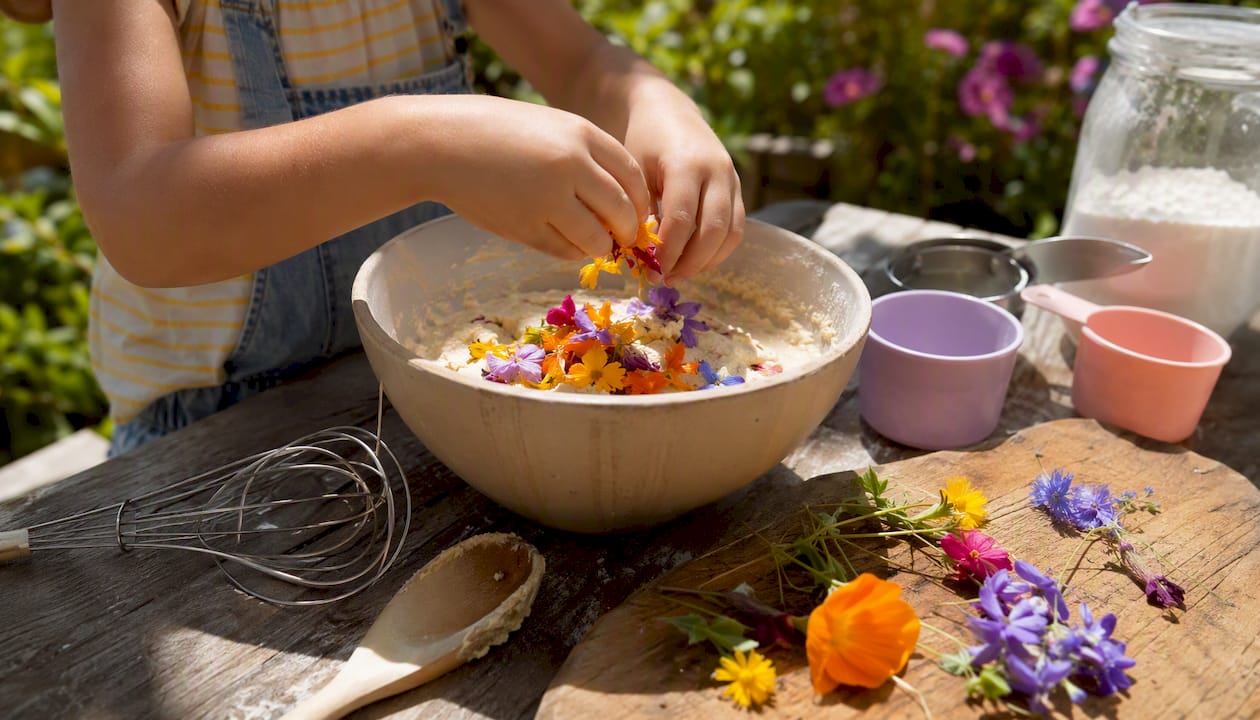
A low-key birthday at home, a small outing to somewhere your child loves, or a simple keepsake ritual will often give a child a far happier birthday than a hall full of balloons and many classmates. Aspect Autism confirms there is no single correct way to celebrate, and that smaller, calmer occasions frequently work better. Here are three you can use this week:
- Low-prep: Special breakfast in bed, a favourite film, a homemade cake decorated together
- Sensory-friendly: A quiet session at a nature reserve, soft café with a calm room, or a sensory play session at home
- Keepsake: A handprint kit, a memory book filled in together, or a family photo taken somewhere meaningful
Key takeaways
Skipping the traditional party and choosing one calm, child-centred alternative is often the decision that makes a birthday genuinely enjoyable for a neurodivergent child.
| Point | Details |
|---|---|
| One idea beats many | Pick a single activity and do it well rather than planning a full programme. |
| Predictability reduces distress | A visual schedule and a familiar sensory kit make any celebration more manageable. |
| Cost need not be high | Most effective no-party ideas cost between £5 and £20, including keepsakes. |
| Age shapes the approach | Toddlers need brevity; primary-age children benefit from genuine choice in what they do. |
| Fidget and Spin is a local option | Private sensory party packages in Brighton and Hove start at £220 for ages 1–7. |
Table of Contents
- Birthday without party ideas: a grouped idea bank
- What to do instead of a first birthday party
- How to make any celebration sensory-friendly
- A simple planning checklist
- Low-cost and last-minute ideas that still feel special
- What to say to family and friends
- Age-specific ideas beyond the first birthday
- The honest truth about skipping the party
- Fidget and Spin’s SEN-friendly birthday sessions in Brighton and Hove
- Sources
- FAQ
Birthday without party ideas: a grouped idea bank
You don’t need a theme. You need a short list you can actually use. These ideas are grouped by setting, with effort and age cues so you can match them to your child quickly.
At-home ideas (low-prep and keepsake)
- Special breakfast spread — their favourite foods, candles optional. Low-prep. Sensory-friendly. All ages.
- Bake and decorate a cake together — the decorating is the activity. Low-prep. Sensory-friendly. Toddler+.
- Movie marathon with a blanket fort — pick their current obsession. Low-prep. Sensory-friendly. All ages.
- Handprint or footprint art kit — a £5–£10 kit from most craft shops. Low-prep. Keepsake. Baby+.
- Memory book session — fill in one page together: favourite things this year, a photo, a drawing. Low-prep. Keepsake. Toddler+.
- Sensory tray play — rice, kinetic sand, or water beads set up on a tray. Low-prep. Sensory-friendly. Baby+. See sensory zone ideas for setup tips.
- Treasure hunt around the house — three to five clues, small prize at the end. Active. 4–8+.
- DIY card-making station — stickers, stamps, glitter glue. Low-prep. Keepsake. Toddler+.
Garden and outdoors ideas (active and nature)
- Garden picnic with bunting — familiar space, fresh air, no crowds. Low-prep. Sensory-friendly. All ages.
- Nature scavenger hunt — printed list of things to spot or collect. Active. Outdoors. Toddler+.
- Bubble station — giant bubble wands, a paddling pool of solution. Low-prep. Sensory-friendly. Baby+.
- Mud kitchen session — if your child loves messy play, this is the day for it. Active. Sensory-friendly. Toddler+.
Outings and experiences (tickets and short day trips)
- Local nature reserve or wildlife park — quieter than theme parks, often free or under £10 per person. Outdoors. Sensory-friendly with planning. All ages.
- Aquarium or small museum — many UK venues offer inclusive adjustments like quiet rooms and advance itineraries. Outdoors. 4–8+.
- Soft café with a calm area — choose off-peak times (Tuesday morning, not Saturday noon). Low-prep. Sensory-friendly. Toddler+.
- Farm visit — animals, open space, predictable layout. Active. Outdoors. Toddler+.
| Idea | Effort | Sensory-friendly | Best age |
|---|---|---|---|
| Special breakfast | Low-prep | Yes | All ages |
| Handprint kit | Low-prep | Yes | Baby+ |
| Garden picnic | Low-prep | Yes | All ages |
| Nature reserve outing | Moderate | With planning | All ages |
| Treasure hunt | Active | Moderate | 4–8+ |
| Bake and decorate | Low-prep | Yes | Toddler+ |
What to do instead of a first birthday party
Remy’s first birthday was a Tuesday afternoon, a banana cake, and the four of us on the kitchen floor. It was perfect. For a one-year-old, the celebration is entirely for the adults, and there is nothing wrong with that, as long as it stays calm enough for the baby.
Ideas that work well:
- A special breakfast with a single candle (they won’t remember the song; they will notice the calm)
- A family photo session at home or a local park, booked in advance
- A small sensory play session on the floor: treasure basket, water tray, soft textures
- A memory book started on the day, added to each year
- A short walk to somewhere they love, followed by their favourite meal
What to avoid at a first birthday:
- Long events that cut across nap time
- Crowded spaces with unpredictable noise
- Multiple rounds of gift-opening with an audience
- Surprise singing (even well-meaning relatives doing it spontaneously)
Pro Tip: Book the celebration around the nap, not the other way around. A well-rested one-year-old at 10 AM is a different creature from an overtired one at 3 PM. Protect the nap and the whole day gets easier.
How to make any celebration sensory-friendly
Picture this: your child is mid-game, doing brilliantly, and then someone turns the music up. They’re gone. Coat on, heading for the door. I know that exit. We’ve done it more times than I can count.
The good news is that most no-party celebrations are already lower-stimulus than a traditional party. A few deliberate adjustments take them further. Coram Family Lives notes that transitions around events can be more overwhelming than the event itself, and that a calm, under-stimulating hour before bed helps children regulate after a big day.
Sensory adjustment checklist:
- Designate a quiet zone (a corner with a beanbag, a favourite toy, low lighting)
- Offer ear defenders or noise-cancelling headphones as a normal option, not a last resort
- Use a visual schedule: three to five pictures showing what happens in order
- Send pre-visit photos if you’re going somewhere new
- Arrive early to let your child explore before other people arrive
- Have a familiar snack available throughout
- Agree an exit code word or signal so leaving never feels like failure
For a simple social story, one page is enough: a picture of the place, a picture of the activity, a picture of home. That’s it. Aspect Autism’s guidance on calmer celebrations backs this up, and our own quiet birthday party guide has a printable version.
Pro Tip: Skip the “Happy Birthday” song if it causes distress. Light the candles in silence, let your child blow them out, and do jazz hands instead of singing. It still feels special. Nobody is missing out.
A simple planning checklist
You don’t need a week. Most of these ideas need three days at most.
Same-day (zero planning):
- Decide on one activity (breakfast, film, garden play)
- Get the cake or ingredients on the way home
- Set up a quiet zone before the child wakes up
Three-day plan:
- Pick the idea and confirm it fits the child’s routine
- Prepare a simple visual schedule (three pictures)
- Pack a sensory kit: headphones, familiar snack, favourite small toy, exit plan
One-week plan:
- Book any tickets or reserve a time slot
- Send a short message to any guests (see scripts below)
- Order any keepsake items (handprint kit, photo book)
- Prepare the visual schedule and do a practice run if it’s a new venue
Rough cost guide:
- Handprint or footprint kit: £5–£15
- Homemade cake ingredients: £3–£8
- Single-child attraction ticket (farm, aquarium, wildlife park): £8–£20
- Photo book or memory journal: £10–£20
What to skip: party bags, elaborate decorations, a formal sit-down meal, and any activity that requires the child to perform happiness for an audience.
Low-cost and last-minute ideas that still feel special
Time is short. Money is tight. The day still matters. These all work same-day or with one quick trip to a supermarket.
- Special breakfast — pancakes, their favourite cereal in a special bowl, a candle in a crumpet. Same-day. Cheap. Sensory-friendly.
- Movie and homemade cake — pick the film first, then bake together. Same-day. Cheap. Sensory-friendly.
- Local park treasure hunt — write five clues on paper, hide them before they wake up. Same-day. Free. Moderate sensory load.
- Handprint card — paint, paper, their hand. Done in ten minutes, kept for years. Same-day. Cheap. Sensory-friendly.
- Custom photo card — most supermarket photo counters do same-day printing for under £2. Same-day. Cheap.
- Bubble station in the garden — a bottle of bubble mix and a warm afternoon. Same-day. Free. Sensory-friendly.
Better Homes & Gardens lists 19 similar approaches including DIY cards and cupcake decorating as widely recommended no-party alternatives. None of them require advance booking or a budget over £20.
If a relative asks why there’s no party, the scripts section below has a line ready for you.
What to say to family and friends
This is the bit nobody talks about. The ideas are easy. The relatives are harder.
- Declining a full party (to grandparents or wider family): “We’re keeping [child’s name]'s birthday small this year. It works better for them. We’d love to see you another day for a quiet tea.”
- Inviting one guest: “We’re doing a low-key birthday, just the two of them. Would [friend’s name] like to come over for an hour on Saturday morning?”
- Explaining sensory preferences: “We’re keeping things calm because [child’s name] finds big gatherings hard to regulate. No singing, no surprises, just a nice quiet time.”
- Asking relatives not to surprise the child: “Please don’t do the surprise entrance or the group singing. We’ll do candles quietly. It genuinely helps them enjoy the day.”
- Group message to wider family: “We’re celebrating at home this year. No party, no presents needed. If you’d like to send a card or a short video message, that would mean a lot.”
- When someone pushes back: “I know it’s different from what you’d expect. It’s what works for our family.”
Do: be specific about times, numbers, and what you need from them. Don’t: over-explain or apologise. One clear sentence is kinder than a paragraph of justification.
Age-specific ideas beyond the first birthday
Toddlers (ages 2–3)
Toddlers live entirely in the present, which is actually a gift. They don’t compare their birthday to anyone else’s. A special breakfast, a new sensory activity, and an extra-long bath with coloured water tablets will feel enormous to a two-year-old. Keep it to ninety minutes maximum. One guest is plenty. The autism-friendly party games guide has low-stimulus activity ideas that work brilliantly at this age.

Primary school age (4–8)
This is where the social comparison starts. They hear about other children’s parties. They may ask for one, or they may dread the idea. Ask them directly what they actually want, and take the answer seriously. A child who says “just me and you and a film” is not being modest; they’re telling you what regulates them.
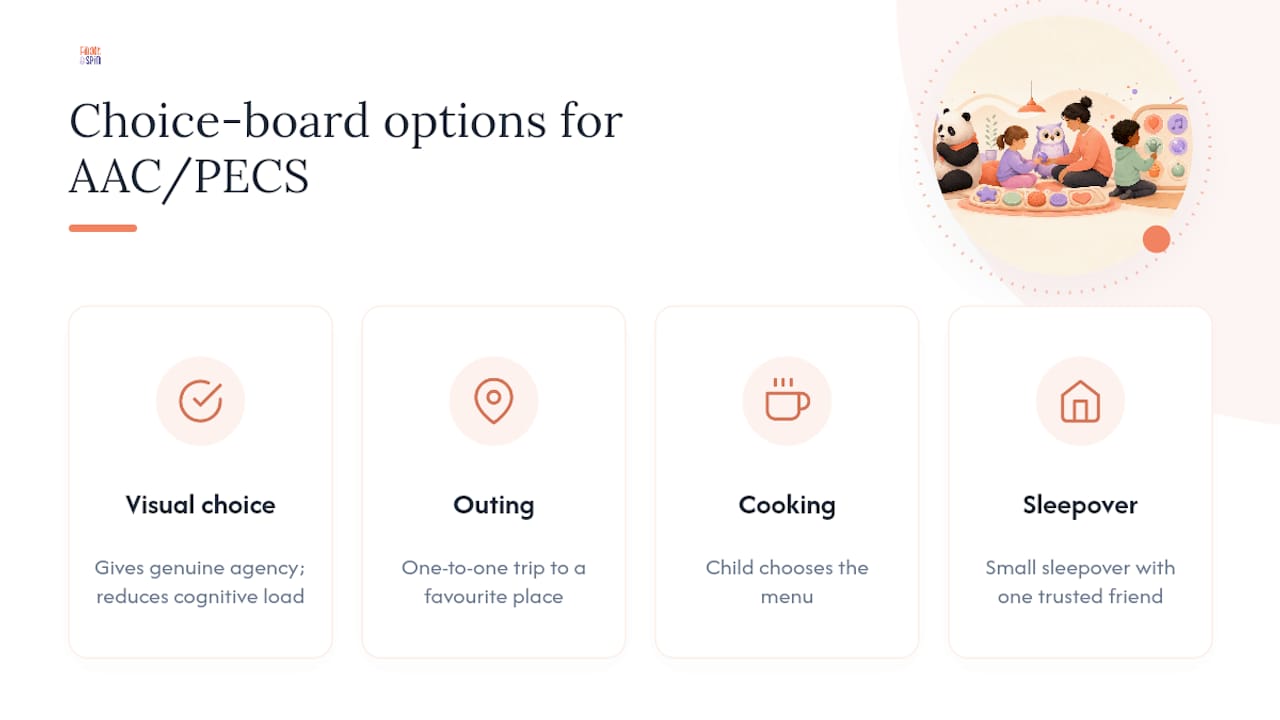
Good options at this age: a one-to-one outing to somewhere they love (a specific museum, a favourite park, a pottery café), a cooking session where they choose the menu, or a small sleepover with one trusted friend. We Too!'s You’re Invited programme offers monthly private birthday experiences built around one child, which models exactly this kind of low-pressure, child-centred approach.
For children who use AAC or PECS, a visual choice board with two or three options gives them genuine agency over the day without the cognitive load of an open question.
Ages 8 and above
Older children often want more say and more specificity. A special day trip, a behind-the-scenes experience (many UK zoos and farms offer these), or a creative workshop booked just for them can feel genuinely exciting without the social pressure of a party. The planning guide for autistic children covers this age range in detail.
The honest truth about skipping the party
I spent two years dreading Remy’s birthdays. Not because I didn’t want to celebrate him. Because I knew what a party would cost him. The build-up, the noise, the expectation to perform joy on cue. We’d leave early, he’d crash hard, and I’d spend the drive home wondering if I’d got it wrong again.
The year we stopped trying to do a normal party was the year his birthday actually felt like his. We went to a place he loved, just the three of us, and came home for cake. No meltdown. No side-eye from other parents. No apology tour afterwards.
What I’ve seen at Fidget and Spin, in our sessions and our party bookings, is that this isn’t unusual. Families who shift to smaller, more predictable celebrations consistently describe less stress, not less joy. The Educating Jacob blog captures this well: rituals and one-to-one outings become the tradition, and children grow up knowing their birthday is genuinely theirs.
The hardest part is giving yourself permission to do it differently. You’re not depriving your child. You’re listening to them.
Fidget and Spin’s SEN-friendly birthday sessions in Brighton and Hove
If you want a celebration outside the house but without the chaos of a mainstream venue, Fidget and Spin offers private sensory birthday party packages across Brighton, Hove and wider Sussex. The space has three sensory zones built specifically for neurodiverse children aged 1–7: Wiggle & Bounce for big movement, Snuggle & Chill for low-stim downtime, and Squish & Squeeze for tactile play. Packages start at a moderate cost for a small, private booking. No surprise singing. No obligation to perform. Flexible timings that work around your child’s routine. If you’re in Sussex and want a calm, child-centred celebration with a venue that was built for this, check availability and packages here.
Sources
- Managing change and transition for neurodivergent and disabled children — Coram Family Lives
- Hosting an inclusive birthday party — Family Fund
- You’re Invited information & registration — We Too!
- 19 ways to celebrate a birthday without having a party — Better Homes & Gardens
FAQ
How do you celebrate a birthday without a party?
Choose one activity your child genuinely enjoys, keep the guest list small or skip it entirely, and build in a visual schedule and a quiet wind-down before bed. A special meal, a favourite outing, or a simple keepsake ritual at home all work well.
What can you do instead of a birthday party for a child?
A nature reserve visit, a baking session, a garden treasure hunt, or a sensory play session at home are all strong alternatives. The key is matching the activity to the child’s regulation needs rather than to social expectations.
What are the best first birthday alternatives to a party?
A special breakfast, a family photo session, a short sensory play session on the floor, and starting a memory book together are all developmentally appropriate and low-stress. Protect the nap and keep the event under ninety minutes.
How do you explain skipping a party to family?
One clear sentence works better than a long explanation: “We’re keeping it small this year because it works better for [child’s name].” You don’t owe anyone a clinical justification. The scripts section above has six ready-to-use templates.