
TL;DR:
- Adjusting the environment is more effective than modifying a child’s behavior when supporting neurodiverse children. Simple changes like creating low-stim zones and using visual supports help reduce anxiety and improve engagement during play. Consistent routines and sensory-friendly spaces enable children to feel safe and participate fully.
Start by changing the environment, not the child. When my son Remy was three, I spent months trying to get him to play “correctly” at groups. Leaving early every single time. Then I moved the furniture, dimmed the lights, and put a spinning top next to the cars. He played for forty minutes. That was the lesson.
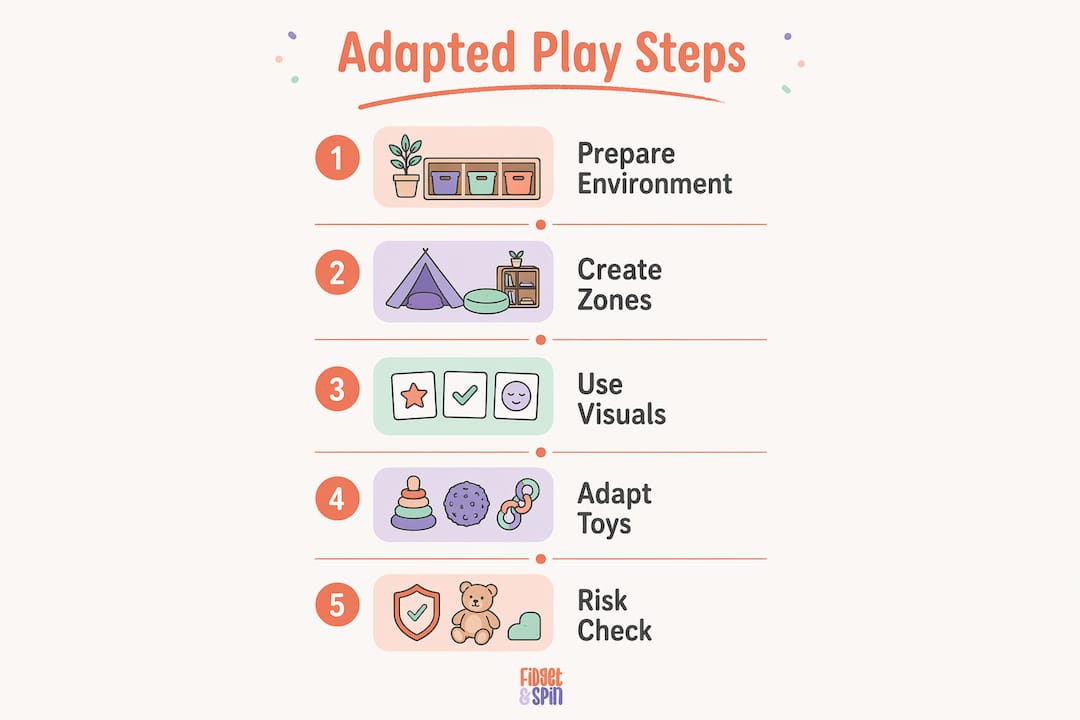
The NHS guidance on supporting autistic children and the Sense toolkit on inclusive play both confirm it: adapting play means adjusting the environment and routine, not the child’s behaviour.
Three things to try right now:
- Create a low-stim nook (a blanket over a clothes rail works fine)
- Make a simple two-picture “now and next” card on your phone
- Swap one toy for something that matches your child’s current obsession
The rest of this guide unpacks each of those steps with checklists you can photograph and use today.
Table of Contents
- Your quick checklist for an adapted play session
- How to create sensory-friendly zones at home
- Using visual supports and routines to ease transitions
- Adapting common toys and activities to match your child
- Proportional risk checks so adventurous play stays possible
- Planning inclusive group play and SEN-friendly parties
- When to ask for extra support in the UK
- Key takeaways
- What I’ve actually learnt from running these sessions
- Sensory sessions and SEN parties in Brighton and Hove
- Useful sources
- FAQ
Your quick checklist for an adapted play session
I used to leave soft play in tears. Not Remy’s tears. Mine. So I made a checklist. Now I run through it before we go anywhere.
Set up:
- Identify or create a low-stim corner (dim light, soft surface, minimal clutter)
- Bring ear defenders, a familiar fidget, and a small snack
- Check the exit route before you start
Offer:
- One interest-led toy or activity (follow what they’re already drawn to)
- A simple visual schedule: three pictures showing what happens first, what comes next, and the safe exit
- A movement option nearby (cushions to jump on, a clear floor space)
End the session:
- Give a two-minute warning using the visual card, not just words
- Have the regulation kit ready for the transition out
- Plan the exit before you need it — planning your exit is a strategy, not a failure
The EPUT sensory awareness toolkit recommends scheduled sensory supports throughout the day rather than as emergency fixes. That reframe alone changed how I planned our mornings.
How to create sensory-friendly zones at home
Remy used to disappear under the dining table when a session got too loud. I stopped pulling him out. That table was doing exactly what a calm zone should do.
The three-zone model we use at Fidget and Spin maps directly onto what children self-select anyway: a movement space, a cosy low-stim retreat, and a tactile/fidget area. You can build all three at home for almost nothing.
| Zone | Purpose | Easy props | Low-cost swap |
|---|---|---|---|
| Movement (Wiggle & Bounce) | Vestibular and proprioceptive input | Cushions, mini trampoline, crash mat | Sofa cushions on the floor, a clear hallway |
| Cosy/low-stim (Snuggle & Chill) | Regulation, decompression | Pop-up tent, fairy lights, soft blanket | Clothes rail with a sheet draped over it |
| Tactile/fidget (Squish & Squeeze) | Sensory exploration, focus | Kinetic sand, sensory bottles, fidget toys | Sealed zip-lock bags of hair gel, dried rice in a tub |
The Leeds sensory toolkit recommends an environmental sensory audit before setting up: walk through the space and note what’s loud, bright, or unpredictable. Fix those first.
Pro Tip: Dim overhead lights and use a small lamp or fairy lights in the cosy zone. Fluorescent or bright white light is one of the most common but least-noticed triggers for dysregulation.
For outdoor play, The Muddy Puddle Teacher suggests starting with a soft toolkit (hoops, spots, cones) before introducing unpredictable natural materials like mud or sticks. That stepwise approach works indoors too. More sensory zone ideas for neurodiverse children are on the Fidget and Spin site if you want to go deeper.
Using visual supports and routines to ease transitions
Remy used to freeze at the door of any new space. Not defiance. Genuine terror of not knowing what came next. A three-card visual sequence changed that within a week.
Here is how to build one:
- Choose three moments: what happens first (e.g., shoes off), what comes next (e.g., choose a toy), and the safe exit (e.g., snack and home).
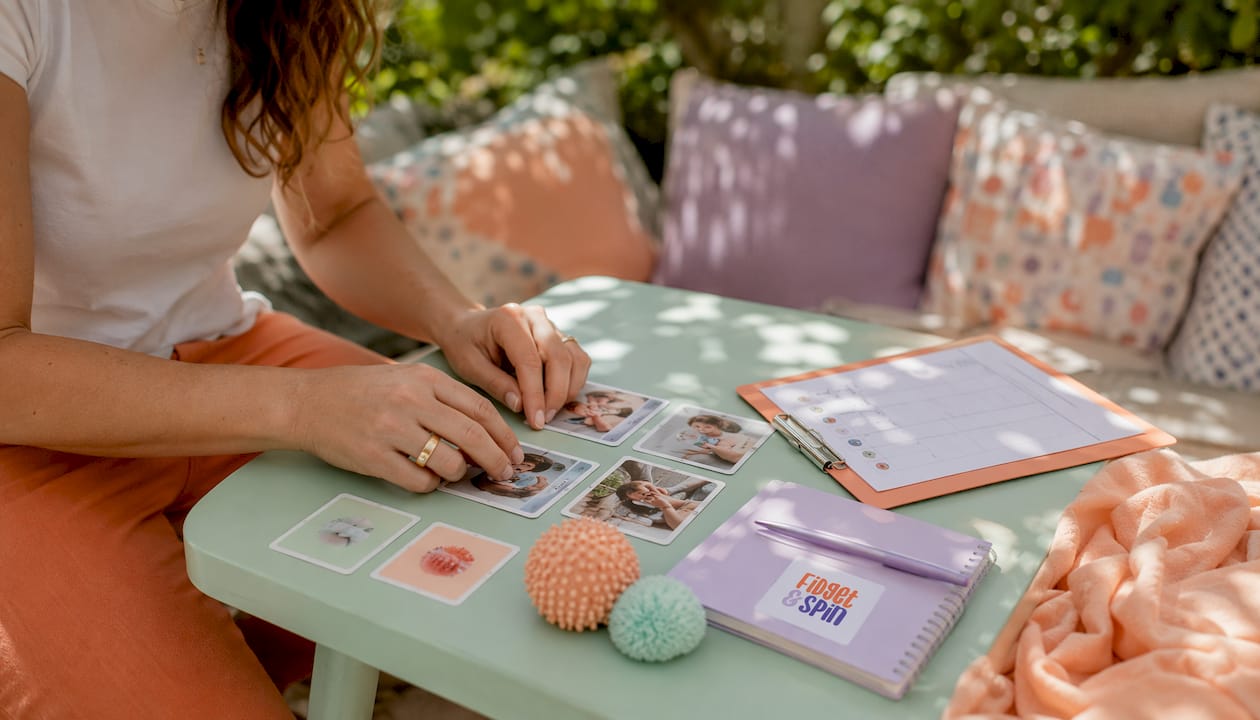
- Use real photos where possible. A photo of Remy’s actual ear defenders beats any icon. Print them or keep them on your phone.
- Place the card at the child’s eye level at the entry point, not on a high shelf.
- Move or remove each card as each stage passes. The physical act of moving the card signals completion.
- Involve the child in choosing pictures when they’re ready. The Sense guidance on ‘now and next’ boards notes that children who help choose their pictures feel more in control of transitions.
For timers, a visual sand timer or the Time Timer app works better than a verbal countdown for many children. Say “two more minutes” AND show the timer. Never just one or the other.
Pro Tip: Personalise visuals from your child’s interests. Remy was obsessed with spinning wheels, so I used a picture of a spinning top to signal “play time.” He understood it immediately.
The Autism Toolbox advises adults to observe motivations and build from natural interests rather than imposing typical play structures. Visuals work best when they speak the child’s language.
Adapting common toys and activities to match your child
Remy lined up every car he owned. In a perfect row. I used to worry. Now I know that was him telling me exactly what he needed: order, pattern, and spinning wheels. So I put a spinning top next to the cars.
Toddlers (1–3): Swap open-ended “pretend” play for cause-and-effect toys. Pop-up toys, simple shape sorters, and water play with cups and jugs. Avoid toys with too many simultaneous sounds.
Preschool (3–5): Introduce mess-free messy play using sealed zip-lock bags of paint or hair gel. The child gets the sensory input without direct contact. Gradually introduce tools (spoons, brushes) before hands. The hand-under-hand method, where you place your hand gently under the child’s and guide rather than direct, works well for children who resist new textures.
Early years (5–7): Adapt turn-taking games by replacing verbal prompts with a tactile signal (pass a small ball to indicate whose turn it is). For non-verbal children, build PECS prompts or AAC device choices directly into the game. “Your turn” becomes a picture card or a button press.
For children with sensitive skin during tactile play, chemical-free options for sensitive skin are worth checking before introducing new materials. More sensory play best practices are available on the Fidget and Spin site.
Proportional risk checks so adventurous play stays possible
The first time Remy climbed higher than I was comfortable with, every instinct said pull him down. I didn’t. He made it. He was so proud. And I realised I’d nearly taken that from him.
The Sense toolkit recommends proportional risk assessments rather than blanket restrictions. Run this quick check before you intervene:
- Who is supervising? Are you close enough to catch or redirect?
- What is the likely hazard? A fall onto grass versus onto concrete are different risks.
- What is one small mitigation? A spotter, a softer landing, a shorter version of the activity.
- What is the exit plan? Can you end the activity calmly if needed?
If the answer to all four is reasonable, let them try. The cost of over-restriction is real: disabled children have had fewer opportunities for play, and that gap compounds over time.
Planning inclusive group play and SEN-friendly parties
The dread before a birthday party is its own specific kind of exhaustion. The noise, the chaos, the well-meaning relatives who don’t understand why Remy needs to leave before the cake.
Party planning checklist:
- Keep sessions to 90 minutes or under
- Stagger arrivals so the space isn’t overwhelming when your child enters
- Designate a quiet corner with a few familiar items before guests arrive
- Share a simple visual schedule with the child beforehand
- Agree a quiet signal between you and your child that means “I need a break”
- Plan food and allergy requirements in advance; avoid surprise food moments
Sample note to a host: “Remy does best with a quiet corner he can retreat to. He may need to leave before the end — that’s fine and planned for. Loud music and sudden noises are hard for him. A heads-up before the birthday song would help. Thank you.”
For families in Brighton and Hove, Fidget and Spin runs SEN-friendly birthday parties for ages 1–7 across Brighton, Hove, and wider Sussex. The venue is set up for sensory needs from the start, so you’re not retrofitting a mainstream space.
When to ask for extra support in the UK
I booked Remy’s first occupational therapy appointment after his third school refusal in a fortnight. I wish I’d done it sooner. The trigger doesn’t have to be a crisis.
- Talk to the SENCO at your child’s school or nursery first. Every school must have a SEN policy. Ask what support is already in place.
- Request an NHS referral via your GP for occupational therapy or speech and language therapy if sensory or communication needs are affecting daily life.
- Contact Sense for practical guidance and local support networks.
- Know your rights under the Children and Families Act 2014. Local Authorities must identify children with SEND and provide support. You can request an Education, Health and Care (EHC) needs assessment if your child’s needs are not being met.
Before any appointment, prepare:
- A short written list of what you observe at home (specific behaviours, triggers, what helps)
- A short video clip if possible (a meltdown, a play session, a transition)
- Three goals you want to work on, in plain language
The impact of sensory play on development is worth reading before an OT appointment — it helps you frame what you’re already doing.
Key takeaways
Adapting play for neurodiverse children starts with the environment and routine, not the child’s behaviour, and the most effective changes are often the simplest ones.
| Point | Details |
|---|---|
| Environment first | Change the space before you change the activity: dim lights, reduce clutter, create a low-stim zone. |
| Visual routine | A three-card “now and next” sequence reduces transition anxiety and gives children a sense of control. |
| Regulation toolkit | Ear defenders, a familiar fidget, and a snack ready at the exit prevent escalation before it starts. |
| Interest-led play | Follow the child’s natural obsessions (spinning, lining up, sorting) and build from there rather than redirecting. |
| Fidget and Spin sessions | Weekly sensory sessions in Brighton and Hove offer a tested three-zone environment for neurodiverse children aged 1–6. |
What I’ve actually learnt from running these sessions
I left a messy soft play in Hove when Remy was two. He’d been dysregulated for twenty minutes, I’d got the look from another parent, and I was carrying him out under my arm while trying to look calm. I was not calm.
That afternoon I started sketching what a session would look like if it was actually built for him. Not adapted. Built. That sketch became Fidget and Spin.
What I know now, after running sessions and talking to hundreds of parents, is that the advice in this guide works — but it works gradually. The first time you try a visual card, your child might ignore it entirely. Try it again tomorrow. And the day after. Consistency is the intervention.
The thing that still feels hard? Siblings. Getting the balance right between adapting for your neurodiverse child and making sure their brother or sister doesn’t feel sidelined. There’s no clean answer. What helps is naming it out loud with the sibling: “We’re doing this because it helps Remy feel safe. What would help you feel good today?”
The three-zone model we use at Fidget and Spin came directly from watching Remy self-select: he’d go big and bouncy, then retreat to something quiet, then come back for something tactile. Children tell you what they need. The job is to build a space where all three options exist.
Sensory sessions and SEN parties in Brighton and Hove
Finding a space that didn’t require Remy to “fit in” was the thing that changed everything for our family. Not a space that tolerated him. One that was built around how he actually plays.
Fidget and Spin runs weekly sensory stay-and-play sessions for neurodiverse children aged 1–6 in Brighton and Hove, across three sensory zones: Wiggle & Bounce for big movement, Snuggle & Chill for low-stim decompression, and Squish & Squeeze for tactile play and fidgets. SEN-friendly birthday party packages for ages 1–7 run across Brighton, Hove, and wider Sussex, starting at a price reflecting typical local rates. Membership options bring session costs down, and Pay-It-Forward concession spots are available at checkout for families who need them.
To book a session or ask about party availability, head to the website. No hard sell. Just a space where your child can play as themselves.
Useful sources
- NHS — supporting an autistic child: practical guidance on environment, routines, and when to seek therapy
- Sense — making play inclusive: toolkit for proportional risk and inclusive play environments
- Sense — play for disabled children: messy play guidance and gradual texture introduction
- EPUT sensory awareness toolkit: NHS-informed sensory strategies for early years
- Autism Toolbox — play and leisure: interest-led play and observation guidance
- Leeds sensory toolkit: environmental audits and tiered sensory provision
- The Muddy Puddle Teacher — outdoor SEND learning: stepwise outdoor play for SEND learners
- Fidget and Spin — sensory sessions and parties: local Brighton and Hove option for neurodiverse families
FAQ
What is the first thing to change when adapting play for a neurodiverse child?
Start with the environment. Reduce sensory overload by dimming lights, lowering noise, and creating a low-stim zone before introducing any new activity or toy.
How do I make a “now and next” board at home?
Use two real photographs or simple pictures: one showing the current activity, one showing what comes next. Place it at the child’s eye level and move each card as each stage passes.
When should I ask for an occupational therapy referral?
Ask your GP for a referral when sensory or processing differences are affecting your child’s daily life, play, or ability to access school. You do not need to wait for a crisis.
Can non-verbal children take part in adapted play activities?
Yes. Build AAC device choices or PECS picture cards directly into games, and use tactile signals (passing a ball) instead of verbal turn-taking prompts to keep play accessible.
What makes a birthday party genuinely SEN-friendly?
Keep it short (under 90 minutes), stagger arrivals, provide a quiet corner with familiar items, and share a visual schedule with the child beforehand. Fidget and Spin’s party packages in Brighton and Hove are set up this way from the start.
Recommended
- How to make play inclusive for neurodiverse kids | Fidget and Spin Brighton
- Effective early years play strategies for neurodiverse children | Fidget and Spin Brighton
- Sensory play best practices for neurodiverse kids | Fidget and Spin Brighton
- What is neurodiversity? A guide for parents and carers | Fidget and Spin Brighton